
Maximise Boxing Day Conversions by Dec 26 2025 | UK
Plan Boxing Day 2025 retail marketing to capture post-Christmas demand, as UK retailers generate up to 25% of seasonal sales. Explore proven tactics now.
MARKETING
Rudra Prakash Parida
12/12/202515 min read
My post content
Introduction: Why Boxing Day Retail Marketing Matters
Boxing Day represents a critical inflection point in the retail calendar one that fundamentally separates winners from those left behind. For decades, Boxing Day meant crowded high streets, bustling shopping centres, and predictable seasonal patterns.
Today, it's entirely different. Consumer behaviour has transformed, and retailers who misunderstand this shift lose market share to those who adapt.
The numbers tell a compelling story. Projected Boxing Day spending in the UK will reach £4.6 billion, yet this money is migrating dramatically online. High street footfall fell 12.3% year-on-year, while shopping centre traffic dropped 13.9% in 2024. Meanwhile, online channels captured approximately 63.9% of Boxing Day purchases a trend that's only accelerating.
This isn't a problem; it's an unprecedented opportunity for retailers willing to adopt modern omnichannel marketing strategies. Brands that master Boxing Day retail marketing in 2025 unlock three immediate benefits: capturing high-intent shoppers actively seeking post-holiday bargains, building customer loyalty that extends into Q1 when retail goes quiet, and generating data intelligence that powers entire marketing calendars.
The challenge is execution. Boxing Day marketing requires precision timing, psychological insight into post-holiday consumer psychology, and technological sophistication across email, social media, mobile, and emerging AI channels.
This comprehensive guide equips you with battle-tested strategies used by leading retailers to dominate Boxing Day, backed by 2025 data, real-world examples, and tactical frameworks you can implement immediately.
Understanding Your Boxing Day Buyer: Journey Stages & Intent
Buyer journey alignment is the foundation of Boxing Day success. Unlike seasonal campaigns that span months, Boxing Day compresses the entire funnel into 48–72 hours, making stage-specific messaging critical.
TOFU: Awareness & Early Discovery
Boxing Day attracts top-of-funnel seekers searching broadly for deals, sales events, and gift inspiration before committing. These shoppers use wide-net keywords: "Boxing Day sales 2025," "best Boxing Day deals," "where to shop Boxing Day."
Your TOFU content should be informational, value-driven, and non-pushy. Focus on gift guides, trend reports, and shopping inspiration rather than hard selling. This stage builds email lists and social followers you'll retarget in MOFU.
Key TOFU messaging: "Discover the ultimate Boxing Day shopping guide trends, are boxing day sales on tomorrow, and how good are boxing day sales"
MOFU: Consideration & Comparison
Mid-funnel audiences understand they want Boxing Day deals; now they're comparing options. They use comparative keywords: "best Boxing Day discounts under £50," "online vs in-store Boxing Day shopping," "gift card promotions Boxing Day."
MOFU content highlights features, benefits, and social proof. Showcase bestsellers with reviews, comparison matrices, and real customer testimonials. This is where you build credibility and reduce purchase friction.
Key MOFU messaging: "Compare Boxing Day offers side-by-side 50% off fashion, exclusive gift card bonuses, and free next-day shipping on 200+ items."
BOFU: Decision & Conversion
Bottom-of-funnel shoppers are ready to transact. They use action-oriented keywords: "best boxing day discounts" "what are the best boxing day sales" "in stock," "Boxing Day sale online."
BOFU content removes barriers. Emphasize urgency ("Only 4 hours left"), scarcity ("Just 12 items left in stock"), guarantees ("30-day returns"), and seamless checkout. Real-time inventory updates, live chat support, and simplified payment options dominate this stage.
Key BOFU messaging: "Boxing Day sale live now 50% off, free delivery, secure checkout. Add to cart in 60 seconds."
Boxing Day Shopping Trends: 2025 Consumer Behaviour Decoded
Consumer behaviour is the North Star of Boxing Day marketing. Understand shifts in how, when, and where shoppers spend and you unlock competitive advantage.
The Unstoppable Rise of Online Shopping
The headline trend: Online now dominates Boxing Day purchasing. In 2023, 63.9% of Boxing Day transactions occurred online; current projections suggest this will exceed 65% in 2025. This isn't cyclical; it's structural.
Why? Cost economics favour online retailers. Maintaining physical stores requires heating, staffing, and energy expenses that online operations don't bear. Meanwhile, energy costs have surged, making store closures economically rational. Major retailers M&S, Next, John Lewis closed on Boxing Day 2024 entirely, funneling shoppers online.
For marketers, this reality demands mobile-first, omnichannel strategies. Consumers expect seamless shopping whether they browse on mobile, check inventory online before visiting a store, or purchase from the comfort of their sofa.
AI & Agentic Shopping: The Concierge Economy
The 2025 Boxing Day season marks a seismic shift: AI moves from helper to decision-maker. In 2024, AI assisted shoppers. In 2025, AI actively recommends, curates, and completes purchases a trend researchers call "Agentic Commerce".
The stats are striking:
85% of retailers use predictive analytics to forecast demand
83% deploy AI agents for shopping assistance
64% of UK shoppers would 'definitely' or 'probably' engage with AI shopping assistants when unsure what to buy
63% of retailers now offer personalized pricing and promotions in real-time
This represents a fundamental power shift. AI agents now surface product alternatives that better match personal specifications, weakening habitual brand loyalty. Retailers who leverage AI gain immediate advantages: faster customer service, scalable personalization, and reduced decision fatigue for shoppers.
Personalization at Scale: The New Expectation
74% of consumers expect personalized experiences from brands, yet many still receive generic, one-size-fits-all campaigns.
Boxing Day is prime territory for personalization. Successful retailers segment audiences by purchase history, browsing behaviour, and gifting intent then tailor recommendations accordingly.
Example: A shopper who purchased men's fashion in November should receive Boxing Day email campaigns featuring menswear, not cosmetics. AI tools can automate this at scale, serving personalized product recommendations to thousands instantly.
The Budget-Conscious Mindset
Unlike December's gift-giving exuberance, Boxing Day shoppers enter with post-holiday pragmatism. They've spent heavily; now they're value-hunting. This psychology shift changes messaging.
December messaging: "Perfect gifts "
Boxing Day messaging: "Treat yourself"
Omnichannel Boxing Day Strategy: Unifying Online & Offline
Omnichannel isn't a buzzword; it's a survival requirement. Shoppers move fluidly between devices, channels, and touchpoints and expect consistent messaging everywhere.
Calendar Synchronization: The Hidden Weapon
Timing is everything during Boxing Day. Roll out all promotions simultaneously across your DTC website, marketplace listings, retail media networks, social channels, and email campaigns.
Why? Because fragmented messaging creates confusion, increases cart abandonment, and dilutes urgency.
Example approach:
December 24: Launch teaser emails ("What is Boxing Day celebrated for?")
December 25 (Christmas Day): Go live with online sales for early birds
December 26 (Boxing Day proper): Full promotion across all channels email, social, paid ads, SMS, website homepage
December 26-28: Real-time inventory management, dynamic pricing adjustments, live countdown timers
Channel-Specific Tactics
Email (Highest ROI):
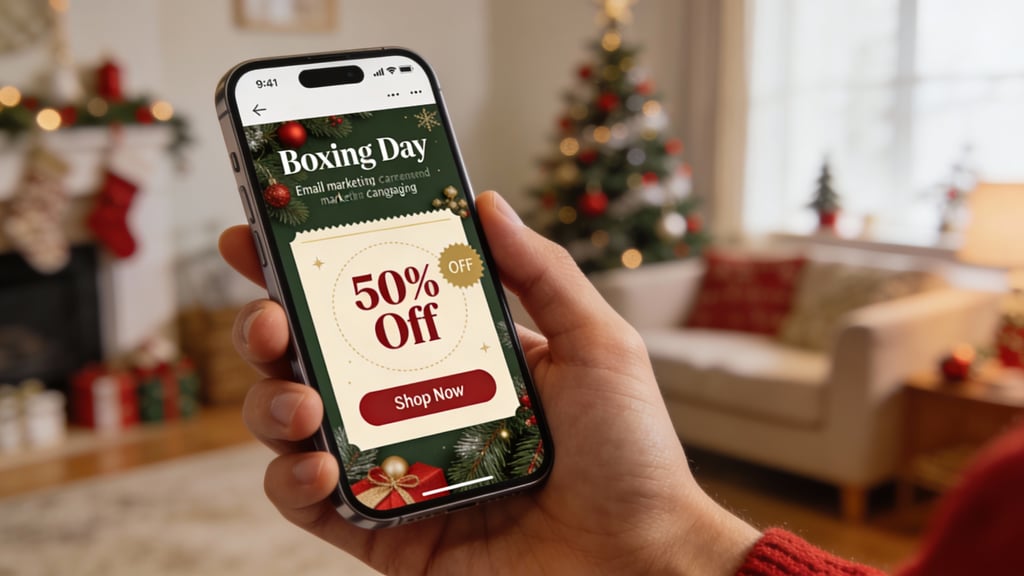
Email remains king for Boxing Day, delivering immediate reach to warm audiences. Deploy segmented campaigns: VIP members get exclusive early access (December 25), while general subscribers see the main sale launch (December 26).
Social Media (Awareness & Community):
Build hype with countdown posts (7 days prior, 48 hours prior, live countdown). Host live shopping events showcasing discounted products. Encourage user-generated content with branded hashtags authentic testimonials outperform polished ads.
Paid Search & Retargeting (Conversion):
Target high-intent keywords like "Boxing Day sale [your brand]" and "online shopping deals." Retarget website visitors who didn't convert with dynamic product ads and urgency messaging.
SMS & WhatsApp (Exclusive Community):
Reserved for VIP/loyalty members, SMS drives highest open rates (98%+) and fastest conversions. Deploy time-sensitive offers: "Flash sale: 50% off ends midnight tonight."
Email Marketing Excellence: Subject Lines & Campaigns
Email is Boxing Day's most controllable, measurable channel. Unlike organic social (algorithm-dependent) or paid ads (budget-dependent), email reaches warm audiences directly.
Subject Line Formulas That Convert
Subject line performance directly correlates with open rates, click-through rates, and conversions. Testing at scale has revealed high-performing formulas:
Formula 1: Benefit + Discount + Urgency
"🎁 50% OFF Boxing Day Sale – Last Chance Today!"
Formula 2: Scarcity + FOMO
"Only 6 Hours Left – Exclusive Boxing Day Deals End Midnight"
Formula 3: VIP Exclusivity
"VIP Access: Early Exclusive – Boxing Day Sale Starts Now"
Formula 4: Benefit-Driven Personalization
"[Name], Your Winter Wardrobe Awaits – Boxing Day 50% Off"
Formula 5: Urgency + Time Stamp
"⏰ Boxing Day Countdown: Order by 3pm for Next-Day Delivery"
Best practices: Keep subject lines under 40 characters for mobile readability. A/B test 2–3 variations per segment. Use emojis sparingly (gift emoji, clock emoji, lightning bolt) to increase inbox visibility without triggering spam filters.
Email Campaign Architecture: TOFU → MOFU → BOFU
Pre-Boxing Day (December 20–24): Build Anticipation
Send 2–3 teaser emails highlighting upcoming deals without revealing full offers. Create VIP early-access campaigns: "Get first dibs on Boxing Day. Join our VIP list for exclusive 48-hour advance access."
Boxing Day Eve (December 25): Final Push
Deploy final reminder with full offer details. Include clear CTAs ("Shop Now," "Browse Deals") and social proof ("Trending: Bestsellers Already 50% Off").
Boxing Day Itself (December 26): Drive Urgency
Send 1–2 emails leveraging real-time inventory and urgency. Use countdown timers ("Sale ends in 18 hours"), low-stock notifications ("Only 5 items left"), and time-based messaging ("Last chance: Free shipping ends at midnight").
Post-Purchase (December 27–31): Nurture & Upsell
This is where long-term value emerges. Send thank-you emails immediately post-purchase—then follow with exclusive January previews and loyalty incentives.
Post-Boxing Day Follow-Up: Retention Focus
A thoughtful email sequence significantly boosts lifetime value. Structure it:
Thank You Email (within 24 hours): Genuine gratitude, order confirmation, tracking details.
Exclusive January Preview (48 hours later): First access to new collections or upcoming sales—makes customers feel valued.
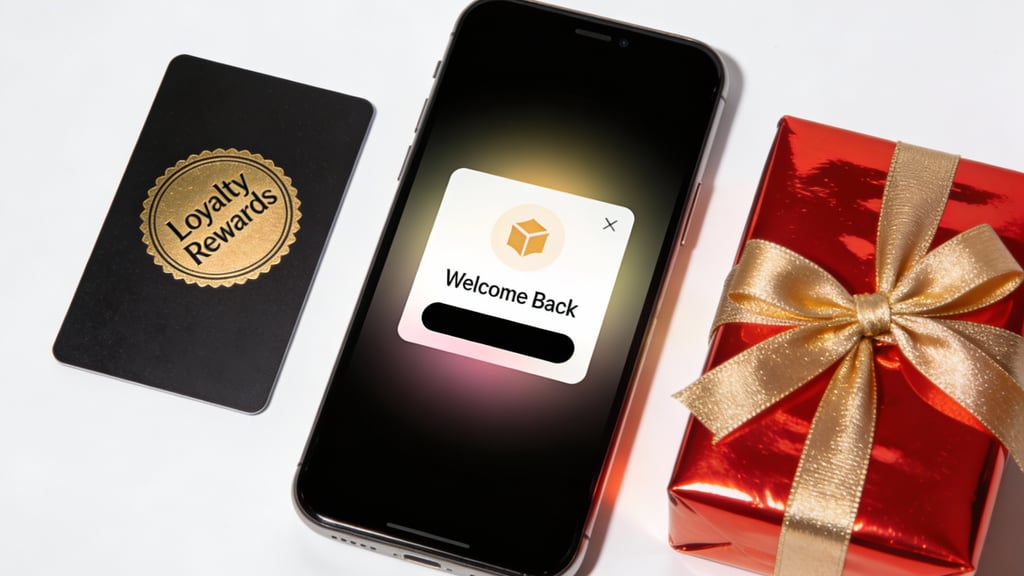
Loyalty Program Incentive (72 hours later): Join our rewards program, earn points on Boxing Day purchases, unlock exclusive benefits.
Learn More About marketing: Master Year-End Holiday Marketing Strategies 2025
Metrics to Track: Boxing Day Email KPIs
Open Rate (target: 25–35% for retail)
Click-Through Rate (target: 3–5%)
Conversion Rate (target: 2–4%)
Revenue per Email (£ revenue ÷ emails sent)
Unsubscribe Rate (should stay below 0.5%)
List Growth Rate (new subscribers from Boxing Day campaigns)
Psychological Triggers: Creating Urgency & Scarcity
Urgency and scarcity are the most powerful psychological levers in retail marketing. Understanding them separates conversion leaders from underperformers.
The Psychology Behind Urgency & Scarcity
Behavioural economics reveals a critical truth: the pain of losing out is twice as powerful as the pleasure of gaining. Urgency and scarcity exploit this loss aversion, triggering FOMO (fear of missing out).
They also cut through decision fatigue. When presented with dozens of options, scarcity and urgency help shoppers settle on decisions faster.
Urgency Tactics for Boxing Day
1. Time-Based Messaging
"Sale ends in 18 hours" (updated hourly in emails)
"Order within 4 hours for next-day delivery"
"This offer expires tonight at midnight"
2. Flash Deals & Lightning Offers
Announce surprise flash sales (2-hour windows) driving immediate action. Example: "Surprise Flash Deal: 60% off fashion 2 hours only, starting 2pm today."
3. Countdown Timers
Display visual timers on product pages and checkout: "This deal expires in 2:34:15." Psychological research confirms countdown timers reduce decision time and boost conversions.
4. Delivery Deadline Messaging
"Order within 3 hours, 22 minutes to receive by December 27th."
This ties urgency to immediate gratification receiving items by a specific date.
Scarcity Tactics for Boxing Day
1. Low-Stock Notifications
"Only 3 items left in stock"
"Hurry: This size is almost gone"
Real-time inventory integration triggers these messages automatically.
2. Limited Quantities
"100 items at 50% off first-come, first-served"
"Boxing Day exclusives available for 48 hours only"
3. Exclusive Access Messaging
"VIP members only" messaging creates perceived scarcity. Offering exclusive deals to email subscribers or loyalty members triggers higher perceived value.
4. Social Proof + Scarcity
Combine testimonials with scarcity: "Over 800 customers bought this today. Only 12 left in stock."
Ethical Application: Avoiding Backlash
⚠️ Critical: Don't fake scarcity or urgency. Inauthentic claims destroy trust and trigger negative reviews. Examples of inauthentic scarcity: false stock warnings (when inventory is actually abundant), perpetually "expiring" timers, fake social proof counts.
Use urgency and scarcity only when genuine: if you truly have limited stock, say so. If delivery times genuinely cut off at midnight, communicate clearly. Transparency builds long-term loyalty.
Post-Boxing Day: Retention & January Loyalty Campaigns
This is where amateurs stop and professionals begin. Boxing Day's value isn't just the immediate revenue—it's the long-term customer lifetime value you unlock through retention.
Consumer Psychology Shift: December to January
Spend patterns shift dramatically from December to January. December revolves around emotional, gift-driven spending. January becomes budget-conscious, value-driven shopping.
Boxing Day shoppers are now "warm" prospects. They've proven willingness to buy and demonstrated product preferences. January is when you convert casual shoppers into loyal, repeating customers.
Post-Purchase Sequence: The 7-Day Blueprint
Day 1 (December 27): Thank You Email
Send within 24 hours of purchase. Include order confirmation, tracking details, genuine gratitude, and customer service contact info. This builds trust and reduces purchase anxiety.
Day 2: Exclusive January Preview
Give Boxing Day customers first access to new collections launching in January. Message: "You shopped with us on Boxing Day here's an exclusive first look at January's new arrivals."
Day 3: Loyalty Program Invitation
Promote your loyalty program emphasizing Boxing Day purchase benefits: "Join our rewards program. Your Boxing Day purchase already earned you 500 points redeem for exclusive discounts."
Day 4: Complementary Product Recommendation
Use purchase history to recommend related items. Bought a winter coat? Recommend matching scarves, gloves, boots. AI should personalize these recommendations.
Day 5: Customer Feedback Request
Send brief survey: "How was your Boxing Day shopping experience? Your feedback helps us improve." Shorter surveys (3–5 questions) see 40%+ completion rates.
Day 7: Win-Back Flash Sale
For browsers who didn't purchase: "We noticed you explored our Boxing Day sale. Here's an exclusive 20% off code valid until tomorrow only."
Building Lasting Loyalty: Long-Term Strategies
1. Loyalty Programs with Real Value
Offer points for purchases, reviews, referrals, and social shares. Provide exclusive perks: early access to sales, birthday discounts, free shipping thresholds. Top retailers see 20–30% higher repeat purchase rates with structured loyalty programs.
2. Personalized Re-engagement Campaigns
January is historically quiet retail. Deploy personalized campaigns targeting Boxing Day shoppers with January-specific promotions. "You loved our winter collection here's 15% off our new spring previews."
3. SMS & WhatsApp for VIP Community
Reserve SMS for loyalty members with exclusive flash sales, birthday offers, and early access windows. SMS achieves 98%+ open rates and drives fastest conversions.
4. Referral Incentives
Leverage Boxing Day customers as advocates. "Refer a friend to our boxing day sale and earn £10 credit for every purchase they make." Incentivize both parties.
5. Sustainable & Ethical Messaging
Boxing Day shoppers increasingly value sustainability. Highlight eco-friendly packaging, ethical sourcing, and charitable partnerships. Sustainable gift packaging with reusable containers resonates with modern consumers, especially among younger demographics.
Technical Implementation: Mobile, Voice Search & Performance
Technical optimization determines whether your brilliant strategy actually reaches customers. Core Web Vitals, mobile experience, and voice search optimization directly impact conversions.
Mobile-First Mandatory: The Boxing Day Reality
Mobile dominates Boxing Day shopping. Most voice searches and on-the-go browsing happen on phones and tablets.
Mobile optimization checklist:
✅ Test all pages on mobile (iOS and Android)
✅ Ensure text readability without zooming (minimum 16px font)
✅ Single-column layout on mobile (avoid horizontal scrolling)
✅ Touch-friendly buttons (minimum 48px × 48px)
✅ Fast load times (under 3 seconds)
✅ Simplified checkout (no more than 3 steps)
✅ Mobile-optimized images (compressed, lazy-loaded)
Voice Search Optimization
Voice search queries differ from text searches—they're conversational, question-based, and longer.
Text search: "Boxing Day sales"
Voice search: "Where can I find Boxing Day sales with free shipping nearby?"
Optimize for voice by:
Target Conversational Keywords
Use question-based keywords: "What is the best Boxing Day sale," "Where to buy Boxing Day deals," "How to get free shipping Boxing Day?"Featured Snippet Optimization
Structure content to appear in Google's "Position 0." Use clear headings, numbered lists, and concise answers (40–60 words) to common questions.Local Search
Optimize Google Business Profile for local Boxing Day queries. Shoppers using voice often search "Boxing Day sales near me" or "open today."Schema Markup Implementation
Implement Article schema (author, publication date, organization), Product schema (price, availability, reviews), and FAQ schema (question-answer pairs). Schema helps search engines understand content context, improving rankings for voice and featured snippets.
Core Web Vitals & Performance
Google ranks fast websites higher. Boxing Day traffic spikes strain servers ensure your infrastructure handles it:
Largest Contentful Paint (LCP): Under 2.5 seconds
First Input Delay (FID): Under 100 milliseconds
Cumulative Layout Shift (CLS): Under 0.1
Optimization tactics:
Enable GZIP compression
Minify CSS, JavaScript, HTML
Use Content Delivery Networks (CDNs)
Lazy-load images below the fold
Cache static assets (7–30 days)
Upgrade hosting if necessary
Image Optimization with SEO Impact
Alt text is critical. Describe images naturally, incorporating keywords where relevant (not forced).
Good alt text: "Red winter coat with gold buttons – Boxing Day sale 50% off"
Bad alt text: "Boxing Day sale coat discount offer red"
Create keyword-rich captions linking back to content context. Images should be compressed (under 100KB for thumbnails, under 500KB for hero images) to maintain load speed.
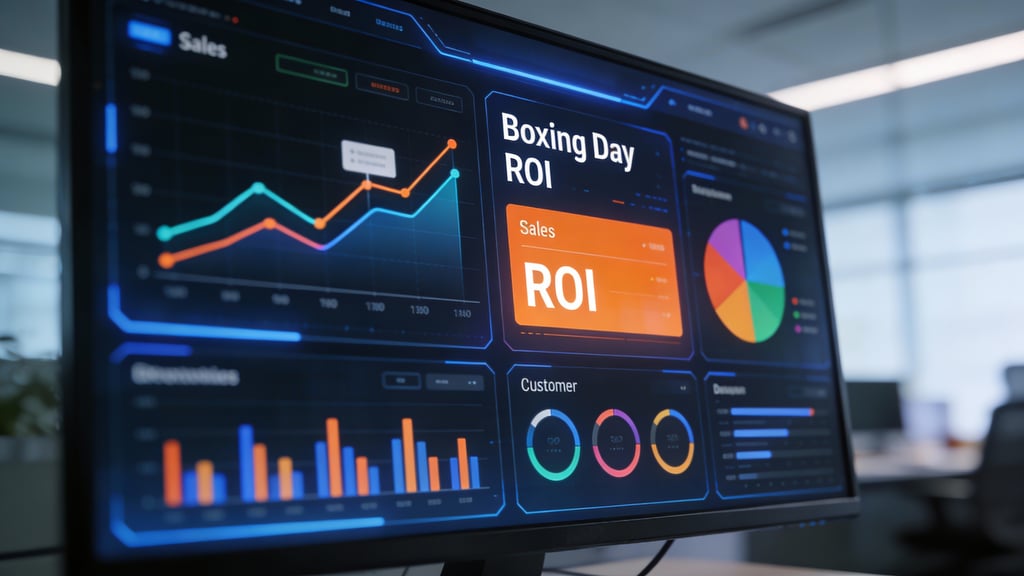
Measuring Success: KPIs & Boxing Day ROI
You can't improve what you don't measure. Boxing Day demands rigorous KPI tracking across every channel.
Top-Line Metrics: Revenue & Profitability
Total Revenue: Compare Boxing Day 2025 vs. 2024; benchmark against Black Friday
Average Order Value (AOV): Track pre-promotion, during-promotion, and post-promotion
Revenue per Visitor: Calculate (Total Revenue ÷ Unique Visitors)
Return on Ad Spend (ROAS): For paid campaigns, track (Revenue from ads ÷ Ad spend). Retail benchmarks: 3:1 to 5:1 ROAS
Email Performance
Open Rate: Target 25–35% (retail average)
Click-Through Rate: Target 3–5%
Conversion Rate: Target 2–4%
Revenue per Email: Calculate across all promotional emails
Unsubscribe Rate: Monitor (should stay under 0.5%)
Website & User Experience
Bounce Rate: Under 40% is solid; monitor by device
Pages per Session: Higher is better (indicates engagement)
Average Session Duration: Aim for 2+ minutes
Conversion Rate: (Conversions ÷ Visitors) × 100
Cart Abandonment Rate: Calculate abandoned carts ÷ total carts created. Industry average: 70%; target: under 65%
Social Media
Click-Through Rate: Links driving to website
Engagement Rate: (Likes + Comments + Shares) ÷ Total Followers
Share of Voice: Your brand mentions ÷ total category mentions
User-Generated Content: Track hashtag mentions, customer testimonials
Customer Acquisition & Retention
Customer Acquisition Cost (CAC): Total marketing spend ÷ new customers acquired
Repeat Purchase Rate: Customers who bought Boxing Day + (previous 12 months) ÷ total customers
Customer Lifetime Value (LTV): Average value each customer generates over relationship
CAC Payback Period: How many months to recoup acquisition cost (ideal: under 3 months)
Post-Campaign Analysis Framework
Create a Boxing Day post-mortem within 5 days:
What worked? Highest-performing channels, best email subject lines, top products
What underperformed? Lowest-performing channels, messaging gaps, technical issues
What surprised us? Unexpected trends, customer behaviour insights
What's next? Lessons for January, Black Friday 2025, and year-round strategy
FAQ: Answering Your Boxing Day Questions
Q1: When should I start promoting Boxing Day sales?
Start email campaigns and social media teasers 3–4 weeks before Boxing Day (early December). For email, deploy announcement emails December 20–24. Go live with full promotions December 25–26.
Q2: What discount percentage drives Boxing Day conversions?
No single answer exists—it depends on your category and margins. Fashion and electronics typically see 40–60% discounts; luxury goods often use 20–30%. Test different discount levels and monitor conversion rates. Urgency and scarcity matter more than raw discount percentage.
Q3: How do I balance aggressive discounting with profit margins?
Aggressive discounting makes sense for high-volume items (clearing old inventory, building customer base). Protect margins on high-profit categories with bundling strategies: "Buy £100 in beauty, get 30% off" rather than blanket 50% discounts.
Q4: Should I focus on email or social media for Boxing Day?
Email delivers highest ROI (retail average: 35–40× return on investment). Social media builds awareness and FOMO. Use email for direct conversions; social for engagement and reach. An integrated approach outperforms channel-siloed strategies.
Q5: How do I handle inventory during Boxing Day?
Monitor real-time stock levels. If items sell faster than expected, dynamically adjust messaging and promotions. Use low-stock notifications to drive urgency on best-sellers. For slow-moving items, deploy deeper discounts or bundle strategies.
Q6: What's the optimal email send time on Boxing Day itself?
No universal "best time" exists—segment by audience and test. Morning sends (7–9am) capture early risers. Midday sends (12–1pm) hit lunch-break browsers. Evening sends (6–8pm) reach leisure shoppers. Deploy A/B test groups and track performance by send time.
Q7: Should I offer free shipping as a Boxing Day incentive?
Yes, if margins allow. Free shipping removes a major cart abandonment trigger and resonates strongly during Boxing Day. If margin constraints exist, offer free shipping on orders over £50 or provide it as a limited-time promotion (December 26–27 only).
Q8: How do I measure Boxing Day's success vs. other peak periods?
Compare against Black Friday 2024, Boxing Day 2023, and year-round averages. Use total revenue, average order value, conversion rate, and customer acquisition cost as primary metrics. Track customer lifetime value—Boxing Day customers often have higher LTV than average.
Q9: How important is AI for Boxing Day 2025 success?
Critical. 64% of UK shoppers will willingly use AI shopping assistants; 83% of retailers already deploy AI for shopping assistance. Not implementing AI puts you at competitive disadvantage.
Q10: Should I extend my Boxing Day sale into January?
Strategic extension is smart. January is historically quiet retail. Run January campaigns targeting Boxing Day shoppers: "Still want more?" offers, loyalty program promotions, and exclusive previews drive repeat purchases when competitors are silent. This extends the Boxing Day selling cycle and builds long-term loyalty.
Conclusion: Boxing Day as Your Q1 Foundation
Boxing Day isn't just a single day of sales—it's the foundation upon which Q1 growth is built. Retailers who master 2025's omnichannel strategies, email tactics, and customer retention sequences will carry that momentum through the quiet January period and beyond.
The data is clear: online is dominant and growing, AI is now expected, not optional, and customer retention trumps one-off transactions. Success requires coordinated execution across email, social, paid channels, and mobile optimization alongside tactical psychology (urgency and scarcity) and long-term retention.
Your action plan:
Now (December 1–20): Build email lists, segment audiences, prepare content
December 21–25: Deploy teaser campaigns, build anticipation, prepare technical infrastructure
December 26: Execute omnichannel strategy with coordinated messaging
December 27–31: Focus on retention, loyalty program enrollment, January preview campaigns
January onwards: Leverage Boxing Day customer base for Q1 growth
The retailers thriving in 2025 aren't those with the biggest discounts they're those with the smartest strategies, the best technology integration, and the deepest customer understanding.
Boxing Day success starts now. Implement these frameworks immediately, track rigorously, and refine based on data. Your 2025 peak season awaits.
About the author
Rudra Prakash Parida is a Financial Professional with an MBA in Business Administration and ACCA qualifications. He specialises in corporate tax planning, SME finance optimisation, and marketing analytics for growth-stage businesses. Through Growth Analytics Hub, he helps UK entrepreneurs and business owners unlock tax efficiency strategies and build data-driven growth systems.
You May Also Like
Based on your interest in Boxing Day retail marketing, explore these related guides:
Black Friday Marketing Strategy: Dominate Peak Season Across Omnichannel
Email Segmentation Tactics Retailers Use in 2025

Subscribe to our newsletter
This comprehensive guide represents current 2025 retail trends. Subscribe to Growth Analytics Hub for quarterly updates on peak season strategies, emerging consumer behaviour, and platform innovations affecting ecommerce success.
Contact
Reach out for insights and support
Phone
+447768010239
© 2025. All rights reserved.