7 Email Segmentation Tactics Retailers Use in 2025
Losing sales to generic emails? Discover the 7 segmentation strategies retailers use to drive 40%+ conversion increases in 2025. Proven tactics inside.
MARKETING
Rudra Prakash Parida
12/15/202516 min read
Email Segmentation for Retail: Drive 40%+ Higher Conversion Rates
Email segmentation has become the cornerstone of high-performing retail marketing strategies, transforming how brands communicate with customers and dramatically improving business outcomes. By dividing email lists into targeted groups based on demographics, behavior, purchase history, and lifecycle stage, retailers can deliver personalized messages that resonate with each segment's unique needs and preferences. The results speak for themselves: segmented email campaigns achieve 6x higher conversion rates compared to generic broadcasts, with open rates climbing 30% higher than non-segmented emails. For retail businesses seeking to increase profitability without ballooning marketing budgets, email segmentation offers one of the highest-ROI tactics available delivering 122% median ROI compared to other marketing channels. This comprehensive guide explores how to implement segmentation strategies that drive 40%+ higher conversion rates, increase customer lifetime value, and transform your email program into a revenue-generating machine.
Understanding Email Segmentation and Its Business Impact
Email segmentation is the strategic practice of dividing your subscriber list into distinct groups based on shared characteristics, behaviors, or preferences. Unlike mass email blasts that treat all subscribers identically, segmentation allows you to customize messaging, timing, offers, and content for each group dramatically improving relevance and engagement.
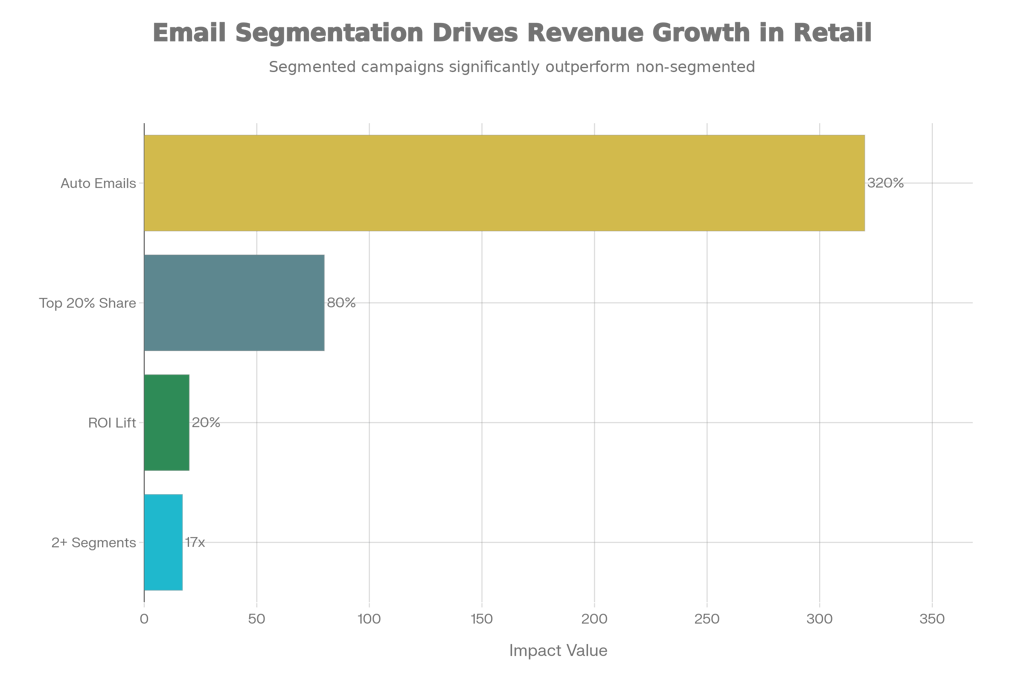
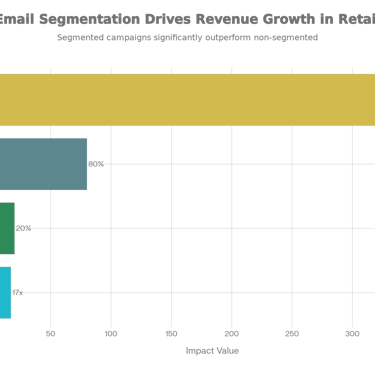
In retail specifically, segmentation addresses a critical pain point: customers expect personalized experiences, not generic promotions. Research shows that 74% of marketers say targeted personalization increases customer engagement, while segmented campaigns drive 50% more click-throughs than unsegmented ones. The numbers are striking merchants with two or more segmented lists earn 17x more revenue than those without, and the top 20% of segmented e-commerce brands capture 80% of total email revenue.
The primary buyer journey stage for email segmentation strategies spans across all three funnel levels: awareness (TOFU), consideration (MOFU), and decision (BOFU). Segmentation enables you to meet prospects at each stage with content precisely calibrated to their needs—educational content for newcomers, comparative information for evaluators, and social proof or limited-time offers for converters.
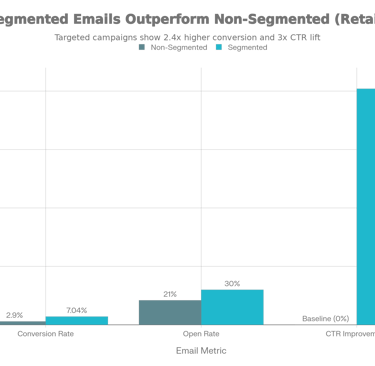
Segmented Email Performance vs. Non-Segmented: The Impact on Key Retail Metrics
The Segmentation Advantage: Converting the Numbers into Strategy
Before diving into implementation, let's quantify why segmentation matters. The statistics reveal a compelling business case that justifies the effort required to build segments.
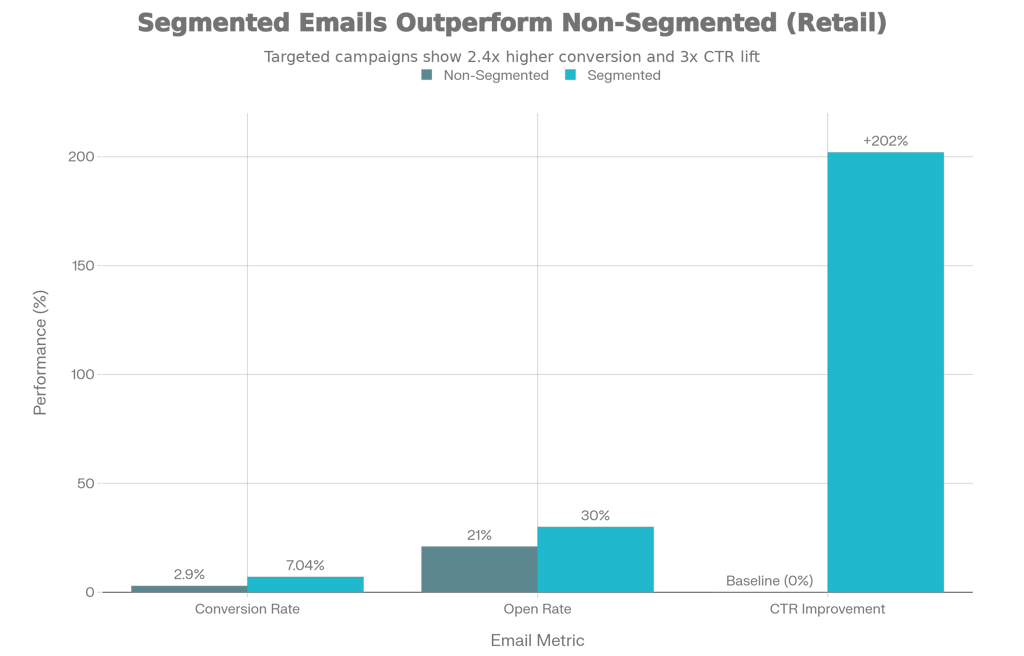
Conversion Rate Excellence: Segmented emails achieve a 7.04% average conversion rate, effectively doubling the rate of non-segmented broadcasts. Beyond generic statistics, real-world case studies reveal even more dramatic results. One pet insurance brand saw a 32% conversion rate increase after implementing segment-specific email journeys, while revenue doubled company-wide. A fashion retailer working with Klaviyo achieved a staggering 323% increase in attributed conversions over five months by combining segmentation with a full-funnel marketing strategy, complemented by targeted SEO and paid media efforts.
Revenue Multiplication: Segmented email campaigns drive deeper revenue impact than most marketers realize. Automated segmented emails generate 320% more revenue compared to non-segmented approaches. Segmentation lifts overall ROI by 20%, and customers acquired through segmented, personalized campaigns show 18x higher revenue potential versus those receiving broadcast emails.
Engagement Metrics: Personalized segmented emails achieve an 18.8% open rate versus 13.1% for generic emails. Segmented welcome emails reach an exceptional 86% open rate. For click-through performance, the differences are equally striking segmented campaigns generate 202% higher click-through rates than baseline sending, with specific tactics like upsell emails reaching 9.7% click-through rates and 9.16% conversion rates.
Five Core Segmentation Strategies for Retail Success
Retail email segmentation isn't one-size-fits-all. Instead, successful programs layer multiple segmentation approaches to create increasingly precise targeting. Here are the primary strategies:
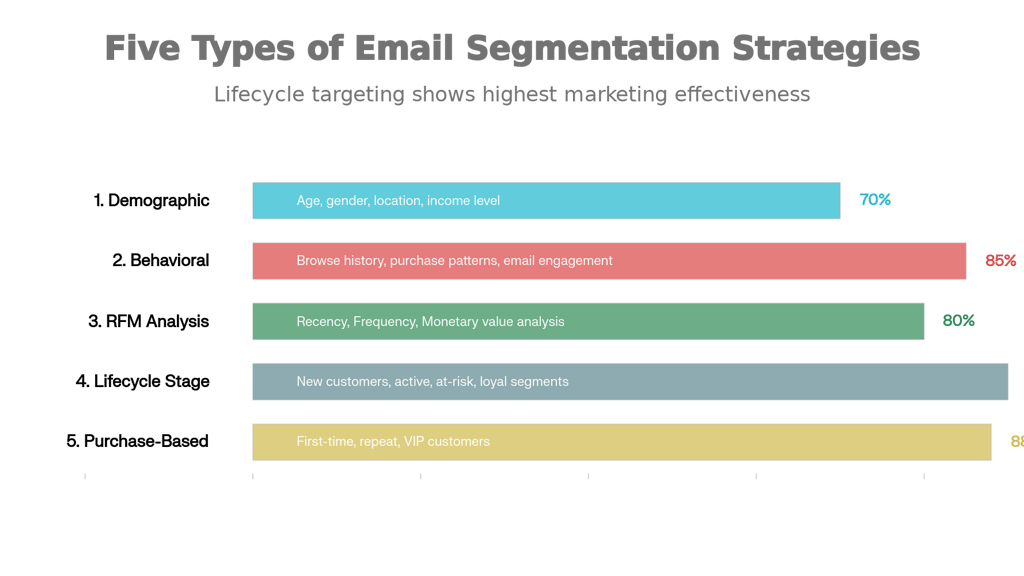
1. Demographic Segmentation: The Foundation
Demographic segmentation divides your audience by static characteristics: age, gender, income level, location, marital status, and family size.
For retail, demographic data enables straightforward personalization. A footwear brand might send different shoe recommendations to men versus women, or feature seasonal products to different climate zones. Geographic segmentation alone allows you to tailor messaging based on location-specific demand Starbucks, for example, promotes hot beverages in cold climates and iced drinks in warmer regions.
The advantage of demographic segmentation is simplicity this data is typically collected during signup and is stable over time. The limitation is that demographics alone rarely predict purchase behavior with high accuracy. A 35-year-old woman doesn't automatically want the same products as every other woman in her age range.
Action items: Capture demographic data through signup forms and preference centers. Segment by geography to localize promotions. Use demographic segments as a foundation layer upon which you build behavioral and purchase-based segments.
2. Behavioral Segmentation: The Game-Changer
Behavioral segmentation is where email programs truly transform. This approach groups customers based on their actions website browsing patterns, email open/click behavior, content consumption, and purchase history.
Behavioral segmentation is the most advanced and effective approach because behavior predicts future behavior far more accurately than demographics. Customers who repeatedly visit your product pages demonstrate clear intent. Those who open educational emails show different interests than those who only engage with promotional content.
Common behavioral segments include:
Browse history: Users who viewed specific product categories (e.g., "browsed winter coats but didn't purchase")
Email engagement: Users who consistently open emails vs. those who never engage
Website activity: Users who completed product reviews, added items to wishlists, or spent extended time on your site
Content consumption: Users who click links to blog posts, guides, or educational resources
Implementing behavioral segmentation requires data infrastructure. You need to track user actions across your website and email platform, then sync that data into your email marketing tool. Platforms like Klaviyo, HubSpot, and Brevo offer robust behavioral tracking and segmentation capabilities.
Action items: Implement tracking pixels on your website to monitor product views and page visits. Create segments for high-intent behaviors (product page visits, wishlist additions, abandoned browsing). Send behavior-triggered emails within hours of the triggering action for maximum relevance.
3. RFM Segmentation: Predictive Customer Value
RFM segmentation evaluates each customer across three dimensions: Recency (how recently they purchased), Frequency (how often they buy), and Monetary value (how much they spend).
Together, these three metrics create a powerful predictive model of customer lifetime value. RFM segmentation categorizes customers into strategic personas:
Champions: Recent purchase, frequent buyer, high spender. Treat like VIPs with exclusive previews and early product access.
Loyal Customers: Consistent purchases over time, medium-to-high spend. Perfect for loyalty rewards and insider perks.
Recent Customers: Made a purchase recently but lower frequency/spend. Target with "thank you" emails and second-purchase incentives.
At-Risk Customers: Haven't purchased recently despite previous activity. Reach out with re-engagement campaigns and special incentives.
Lost Customers: Purchased long ago and haven't returned. Send win-back campaigns with strong incentives.
RFM creates an elegant framework because it requires only transactional data you already have. No complex tracking needed. The model automatically identifies your highest-value customers so you can prioritize communication and offers toward them.
Action items: Calculate RFM scores for your entire customer base using historical purchase data. Create automated email sequences for each RFM persona. Reserve premium offers and exclusive content for Champions and Loyal Customers. Design win-back campaigns specifically for At-Risk and Lost segments.
4. Customer Lifecycle Segmentation: Journey-Based Targeting
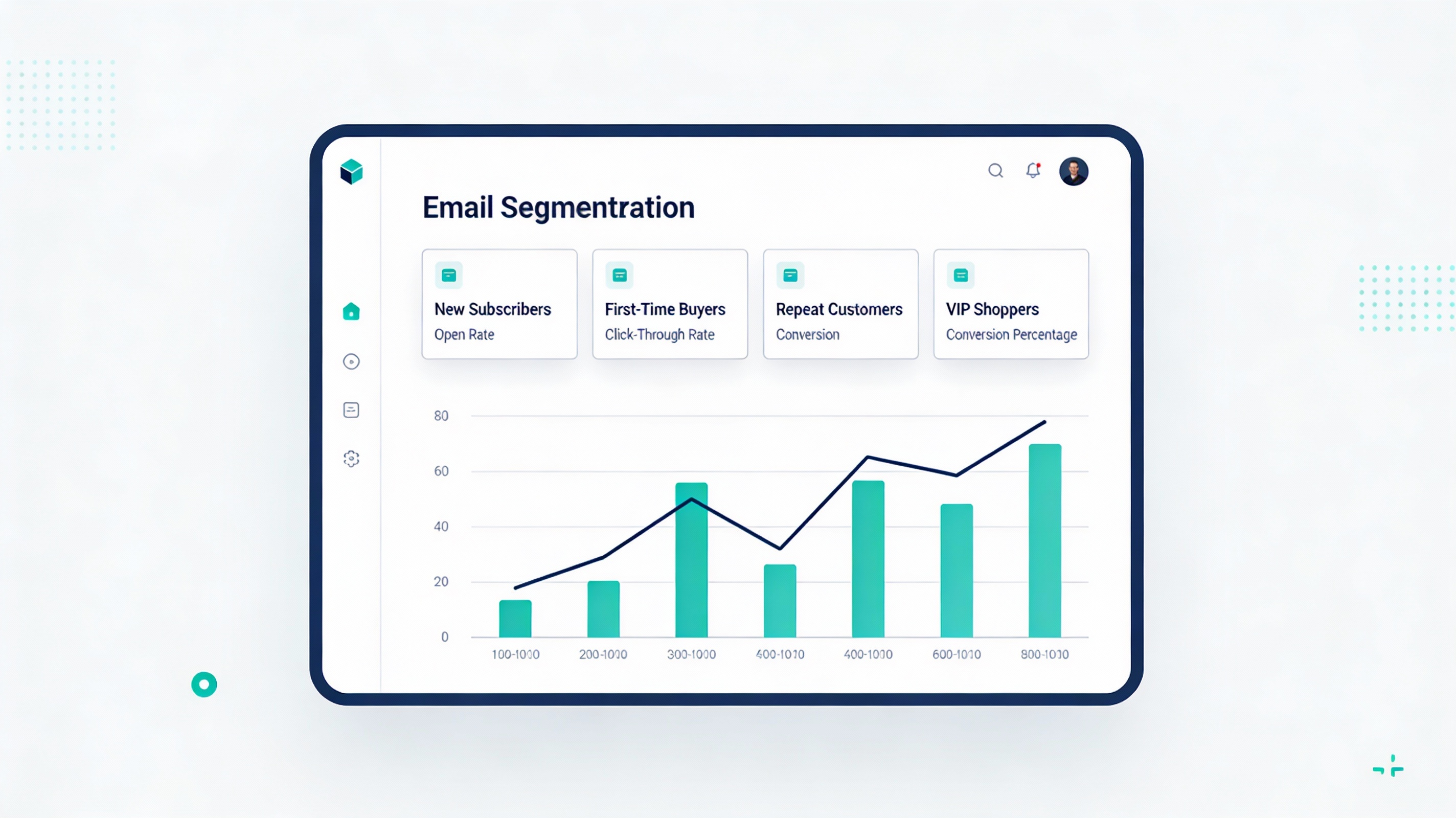
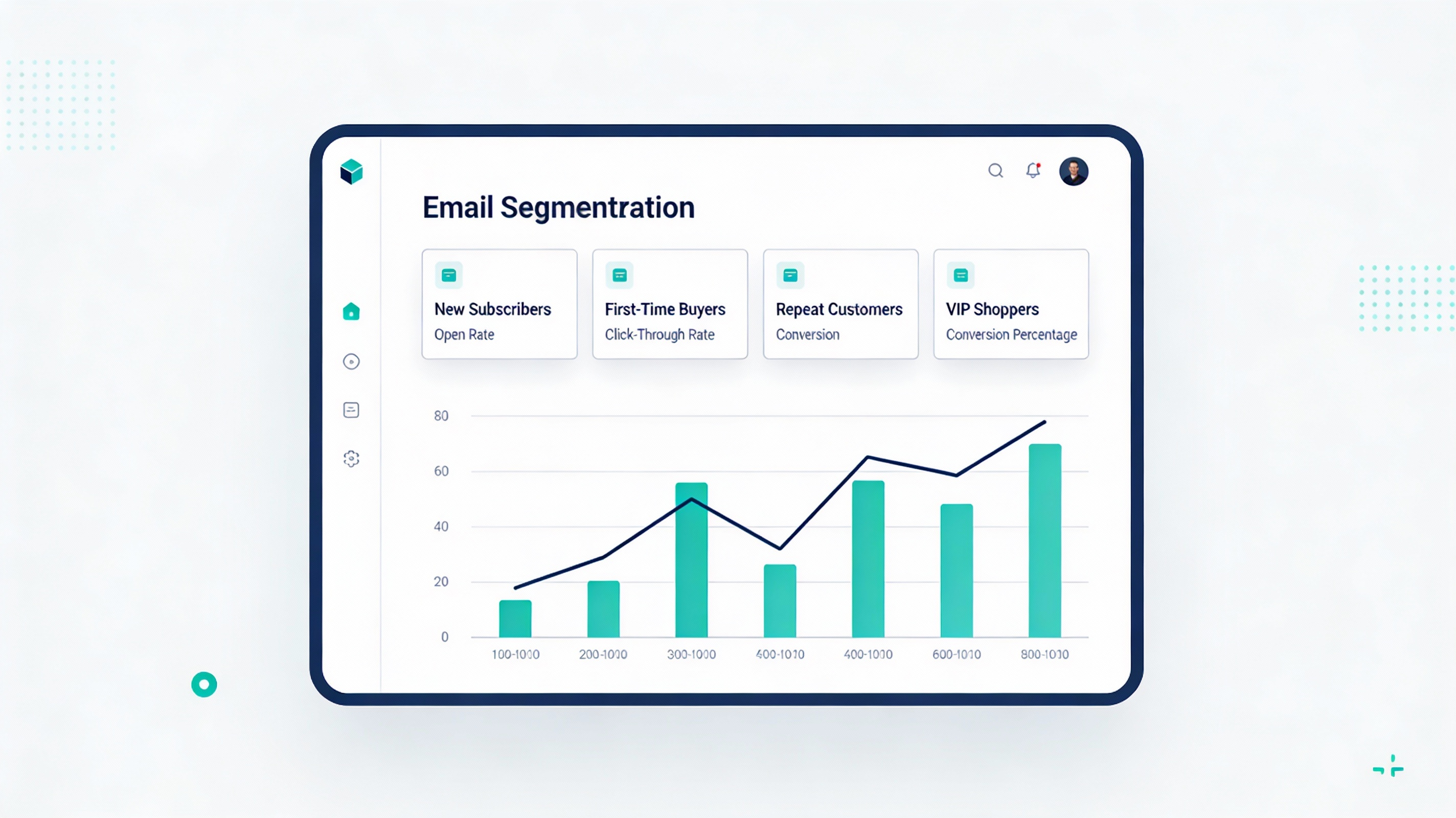
Email segmentation works brilliantly when aligned with where customers stand in their journey with your brand. Lifecycle segmentation divides audiences into stages: New Subscribers, First-Time Buyers, Repeat Customers, and VIP/Loyal Customers.
Each lifecycle stage has distinct needs and behaviors, requiring completely different email strategies:
New Subscribers (Awareness Stage): Haven't purchased yet. Need brand education, social proof, and confidence-building content. Welcome series should focus on brand story, customer testimonials, and removing purchase barriers.
First-Time Buyers (Consideration to Decision): Made one purchase. Goal is to drive a second purchase quickly (within 30-60 days). Send complementary product recommendations, exclusive second-purchase discounts, and usage guides.
Repeat Customers (Loyalty): Demonstrated loyalty and trust. Segment further by purchase frequency occasional repeaters versus habitual buyers receive different messaging strategies.
VIP/Loyal Customers (Advocacy): Highest lifetime value. Send exclusive early access, VIP-only collections, and referral incentives.
Welcome series example: A 5-email welcome journey might look like: Email 1) Welcome + brand story, Email 2) Customer testimonials + social proof, Email 3) Top 3 best-sellers, Email 4) Special first-purchase offer, Email 5) Hassle-free returns guarantee.
Action items: Map your customer lifecycle stages in your email platform. Create separate welcome series for new subscribers. Set up automated second-purchase campaigns triggered 5-7 days after first purchase. Build VIP segments with exclusive content and offers.
5. Purchase-Based Segmentation: Maximizing Order Value
Beyond lifecycle, segment customers based on specific purchase behaviors and patterns.
First-Time Buyers vs. Repeat Customers: These two segments require opposite approaches. First-time buyers need reassurance about product quality and returns. Repeat customers have already trusted you and respond better to product launches, new arrivals, and loyalty rewards. Repeat customers who make 2+ purchases should be treated like VIPs, featuring them in campaigns for new arrivals, exclusive previews, and insider perks.
Abandoned Cart Recovery: Customers who abandoned shopping carts represent immediate revenue opportunity. Research shows 10% higher conversions for abandoned cart emails using segmentation, with messaging varying dramatically by customer type. First-time abandoners need reassurance; frequent shoppers respond to loyalty incentives; repeat abandoners might need discounts or pain-point messaging.
Product Category Preferences: If you sell diverse categories (apparel, home goods, beauty, etc.), segment by past purchases. Someone who bought winter coats should receive winter accessory recommendations, not summer items. Dynamic content (email sections that change based on segment) can personalize product recommendations within a single email template.
Action items: Create separate campaigns for first-time vs. repeat buyers. Implement triggered abandoned cart emails with segment-specific messaging. Use product category history to customize product recommendations.
Implementing Email Segmentation: The Step-by-Step Framework
Building segmentation from scratch can feel overwhelming. Here's a practical implementation roadmap:
Phase 1: Assess Your Current State
Start by auditing your existing email infrastructure and customer data. Ask yourself:
Do you have customer behavioral data (browsing history, page visits)?
Is purchase history centralized and accessible?
Do you capture demographic information at signup?
What percentage of your list is engaged versus dormant?
Many retailers discover they have data silos purchase information in their e-commerce platform, email engagement metrics in their ESP, and website behavior scattered across analytics tools. Unifying this data is the critical first step.
Phase 2: Choose Your Email Platform and Set Up Integrations
Not all email platforms support segmentation equally. Klaviyo excels at behavioral segmentation with 350+ integrations and flexible APIs. HubSpot offers AI-powered segment suggestions using data from CRM systems and web visitors. MailerLite and Brevo provide simpler segmentation for growing businesses.
Ensure your chosen platform can:
Import and sync customer data from your e-commerce platform automatically
Track website behavior and email engagement
Support dynamic content (content blocks that change based on segment)
Integrate with your analytics tools for performance measurement
Phase 3: Start Simple, Then Layer Complexity
Don't attempt to build 20 segments simultaneously. Most successful retailers begin with 3-5 segments:
Welcome/New Subscriber Segment: Triggered automatically when someone signs up
First-Time Buyer Segment: Triggered after first purchase
Engaged (Open/Clicker) Segment: Behavioral segment of active emailers
Dormant/Unengaged Segment: Users who haven't opened emails in 90 days
High-Value Customers: RFM-based segment of your top spenders
Once these foundational segments deliver results, layer in additional sophistication: geographic targeting, product category preferences, abandonment triggers, and so on.
Phase 4: Build the Data Foundation
Data quality determines segmentation quality. Implement these best practices:
Centralized customer data from all touchpoints website, app, in-store, email, CRM
Use dynamic tags and filters instead of static lists for segments that update automatically as customer behavior changes
Maintain clean data by removing hard bounces regularly and validating email addresses
Protect the master list rather than fragmenting your original subscriber database; instead, work with copies when making segment-specific changes
Phase 5: Define Segment-Specific Email Strategies
For each segment, document:
Segment goal: What action do we want this segment to take?
Message focus: What's the primary benefit or pain point we're addressing?
Offer strategy: What incentive (if any) should we extend?
Frequency: How often should we contact this segment?
Preferred send time: Does this segment have optimal engagement timing?
Example: For the "Frequent Abandoners" segment (customers who leave carts 3+ times without purchasing), the goal is abandonment recovery. Message focus is addressing obstacles (perhaps emphasizing free shipping or ease of returns). Offer might be a modest discount. Frequency should be less frequent than engaged segments to avoid annoyance.
Phase 6: Automate with Trigger-Based Campaigns
Static segments (send a campaign once) generate decent results. Triggered, automated segments (send based on specific actions) drive 320% more revenue.
Implement automation for:
Welcome series (triggered by signup)
Post-purchase emails (triggered by purchase completion)
Abandoned cart recovery (triggered by cart abandonment)
Browse abandonment (triggered by product page views without purchase)
Win-back campaigns (triggered by 90+ days of inactivity)
Loyalty rewards (triggered by 3rd, 5th, 10th purchases)
Automation ensures timely delivery and removes manual effort from repetitive tasks.
Advanced Segmentation Tactics: Driving 40%+ Conversion Increases
Moving beyond basic segments, advanced retailers layer multiple tactics to achieve exceptional results:
Dynamic Content: Personalization Within a Single Email
Rather than sending completely different emails to different segments, use dynamic content blocks that adapt based on the recipient's segment. A single email template can showcase different products, offers, or messaging based on customer data.
Example: A welcome email might have a dynamic block showing the product category the subscriber has viewed. A browsing enthusiast who visited winter coats sees coat recommendations. Someone who browsed boots sees boots. Same email, dramatically more personalized.
Implementation: Most modern email platforms (Klaviyo, HubSpot, Brevo) support dynamic content through conditional logic or AI-powered personalization. You define rules like "If customer has browsed Product Category X, show Product Category X recommendations."
Predictive Intent Signals
Advanced retailers use machine learning to identify high-intent segments based on browsing patterns, email engagement timing, and cross-channel signals. Instead of waiting for customers to explicitly tell you their interests, predictive models identify likely-to-convert segments before they take obvious action.
Example: A customer browsing your site at 9 PM on weekends might have different intent than someone shopping at 2 PM on weekdays. Seasonal browsing patterns might predict gift-buying behavior. Email engagement metrics combined with web behavior might reveal someone ready to upgrade from basic to premium products.
Behavioral Cohort Analysis
Group customers by similar behaviors over time rather than static segments. For instance, identify customers who used a key feature within their first week this cohort likely differs significantly in long-term value from those who didn't discover it until week 4.
This approach is particularly powerful because it reveals how customers adopt your products and helps predict future actions.
Churn Prediction and Win-Back
Use historical data to identify customers at risk of churning before it's obvious. Machine learning models can spot patterns declining purchase frequency, lower order values, increased email inactivity—that precede churn. Armed with this insight, send targeted win-back campaigns with powerful incentives before the customer fully disengages.
Segmentation Mistakes to Avoid
Even well-intentioned segmentation efforts fail when marketers fall into these common traps:
Mistake #1: Segmenting Without Purpose
Creating segments feels productive, but segments without clear objectives waste resources. Every segment should answer: "What personalized value does this provide to recipients, and what insights does it provide to our business?"
Fix: Before creating a segment, define its purpose. If you can't articulate why the segment exists and what marketing value it creates, don't build it.
Mistake #2: Segments That Are Too Vague or Too Specific
Segments that are too broad (e.g., "all customers who engaged with our store") don't enable meaningful personalization. Segments that are too narrow (e.g., "customers aged 27-29 who bought athletic shoes between January-March") may contain only 5 people too small for useful campaign testing.
Fix: Segments should be large enough for statistical significance and small enough for meaningful personalization. As a benchmark, segments should contain at least 2-3% of your list.
Mistake #3: Sending Every Email to Every Segment
Enthusiasm for personalization sometimes leads marketers to bombard every segment with every email. Even with personalization, frequency fatigue damages engagement.
Fix: Define which segments receive which communications. High-engagement VIP segments might receive 2-3 emails weekly. New subscribers might receive a structured 5-email welcome series over 2 weeks, then transition to weekly sends. Dormant segments should receive minimal contact until re-engaged.
Mistake #4: Not Testing Segment Performance
You can theoretically segment by many factors. But without testing, you don't know which segments actually correlate with desired behaviors.
Fix: Start with your strongest hypotheses (e.g., "repeat buyers will respond better to new product launches than first-time buyers"). Test through controlled campaigns. Track segment performance via open rates, click rates, conversion rates, and revenue. Refine based on results.
Mistake #5: Using Outdated Segmentation Criteria
Segments built on last year's data or historical patterns become stale. A customer who was dormant 6 months ago might be highly active today.
Fix: Use dynamic segments that update automatically based on recent behavior. Review and refresh segment criteria quarterly. As customer preferences evolve, your segments should too.
Real-World Results: Case Studies in Segmentation Success
Case Study 1: Pet Insurance Brand—32% Conversion Lift and Doubled Revenue
A pet insurance company struggled with cart abandonment and low conversion rates despite driving significant traffic. Through segmentation analysis, they discovered customers at different points in the buying journey needed different messaging.
They implemented lifecycle-based email segmentation with tailored journeys for:
Exploratory visitors: Sent educational content about different coverage options
Active quote builders: Targeted with urgency messaging and trust signals
Frequent quote restarters: Addressed specific concerns (e.g., pre-existing condition worries)
Results:
32% conversion rate increase for segmented campaigns
Deliverability improved by 2% (better targeting means fewer spam complaints)
Unsubscribes dropped 21% (recipients appreciated relevant messaging)
Revenue doubled company-wide (proved by attributed email tracking)
Case Study 2: Fashion Retailer—323% Increase in Attributed Conversions
A fashion e-commerce brand partnered with a digital agency to overhaul their Klaviyo email program. They implemented:
Customer segmentation by RFM scores, purchase history, and engagement levels
Automated workflows for welcome series, post-purchase, and browse abandonment
Excluded segments preventing frequency fatigue and protecting brand perception
Full-funnel strategy integrating email, PPC, SEO, and paid social
Results (within 5 months):
323% increase in email-attributed conversions
109% year-over-year conversion rate increase
83% increase in monthly DTC revenue
77% increase in monthly site users
25% increase in organic search revenue (from supporting SEO work)
The success came not from email segmentation alone, but from sophisticated segmentation coordinating with a full-funnel strategy.
Case Study 3: Win-Back Campaign Success
One retailer implemented a targeted win-back campaign for dormant customers (no purchases in 180+ days) with segment-specific messaging:
Frequent former buyers received exclusive early access to new collections
One-time buyers received a strong incentive (25% off) plus social proof
Browsers who never purchased received an educational email addressing top objections
Results:
15% conversion rate on win-back email (vs. 2-3% for regular promotional emails)
Reactivated 12% of dormant list into active customers
Lower acquisition cost than acquiring brand-new customers
Strategic Implementation: Timeline and Resource Planning
Successful segmentation doesn't happen overnight. Here's a realistic implementation timeline:
Weeks 1-2: Audit and Planning
Audit current email performance and existing segments (if any)
Assess data quality and identify data silos
Define top 3-5 priority segments to build first
Select email platform if not already in place
Weeks 3-4: Technical Setup
Integrate email platform with e-commerce system
Implement website tracking for behavioral data
Clean and migrate existing subscriber data
Create foundational segments in your email platform
Weeks 5-8: Campaign Development
Write segment-specific email copy and offers
Design email templates with dynamic content
Set up automated workflows and triggers
Prepare test campaigns for initial segments
Weeks 9-12: Launch and Testing
Send test campaigns to small segments
Monitor open rates, click rates, conversion rates
Analyze performance versus control group
Refine segment definitions and messaging based on results
Months 4-6: Optimization and Expansion
Roll out successful segment strategies to full segments
Add new segments based on learnings
Implement advanced tactics (predictive scoring, behavioral cohorts)
Document playbooks for recurring campaigns
Frequently Asked Questions: Email Segmentation for Retail
Q: Do I need to segment from day one, or can I start with a single list?
A: Start with a single list if you have fewer than 5,000 subscribers. Most segmentation value appears when you have sufficient subscribers per segment to achieve meaningful personalization (2-3% of list minimum). Once you reach 5,000+ subscribers, segmentation ROI increases dramatically.
Q: What's the minimum segment size for meaningful results?
A: Segments should contain at least 50-100 people for statistically meaningful results, though larger is better. Micro-segments of 10-20 people can work for highly targeted campaigns but shouldn't be used for major send decisions.
Q: How often should I update my segments?
A: Dynamic segments that update automatically as customer behavior changes are ideal. At minimum, refresh segments monthly. Behavioral segments (based on recent actions) should update weekly or even daily.
Q: Can I segment by engagement level? Isn't that risky?
A: Segmenting by engagement level is essential. Sending to unengaged subscribers damages sender reputation and deliverability. Most platforms allow you to segment out completely unengaged users (no opens in 180+ days) while maintaining list health.
Q: Won't segmentation reduce my email frequency and thus revenue?
A: This is a common fear, but data contradicts it. While segments might receive slightly fewer total emails, those emails are more relevant and convert better. The net result is higher revenue per subscriber due to improved conversion rates despite lower volume.
Q: What if I can't centralize all my customer data?
A: Start with the data you have. Most platforms support basic demographic segmentation from signup forms. Add behavioral data as your infrastructure improves. Build segmentation capability incrementally rather than delaying until your data is perfect.
Q: How do I handle customers who fit multiple segments?
A: Most email platforms allow overlapping segments. Use automation rules to prevent sending duplicate emails to the same person. Typically, route people to the highest-priority segment (e.g., VIP customer > repeat customer > new customer).
Q: Is there a best day or time to send segmented emails?
A: Send times should vary by segment. New subscribers might prefer evening sends when they have time to explore. VIP customers might engage best with morning sends. Use your platform's analytics to find optimal send time by segment, or use AI-powered send time optimization if available.
Q: What's the relationship between segmentation and GDPR/CCPA compliance?
A: Segmentation actually improves compliance by enabling more targeted, consent-based communications. Segment subscribers by preference (email frequency preference, content type preference) and respect those preferences rigorously.
Key Takeaways: From Theory to Practice
Implementing email segmentation isn't about perfection it's about progressive improvement. Start with one foundational segment, measure results, expand, and refine. The retailers achieving 40%+ conversion increases didn't build 50 segments simultaneously. They started with 3-5 segments, proved the concept, then scaled.
Key Takeaway #1: Segmented emails achieve 7.04% conversion rates, more than double the non-segmented average of 2.9%. Even modest segmentation implementation pays measurable dividends.
Key Takeaway #2: RFM segmentation (Recency, Frequency, Monetary value) offers quick implementation and powerful results. Many retailers achieve significant uplift from RFM segmentation alone before layering behavioral complexity.
Key Takeaway #3: Welcome series segmentation is disproportionately valuable. A well-designed, segmented welcome series compounds into higher lifetime value across the customer journey.
Key Takeaway #4: Automation multiplies segmentation impact. Triggered, behavior-based campaigns drive 320% more revenue than static segmentation. Invest in workflow automation early.
Key Takeaway #5: Quality matters more than volume. Fewer, more relevant emails to highly segmented audiences outperform high-volume blasts to broad audiences. Resist the temptation to send every email to everyone.
Your Next Steps: Implementing Email Segmentation This Month
Don't wait for the "perfect time" to start segmentation. Begin implementing these tactics immediately:
This Week:
Audit your current email list and identify existing segments (if any)
Review your email platform's segmentation capabilities
Define your top 3 priority segments
Document segment criteria and messaging strategies
This Month:
Set up basic demographic and behavioral segments in your email platform
Create a welcome series targeted specifically to new subscribers
Build a second-purchase campaign specifically for first-time buyers
Launch one automated workflow (e.g., abandoned cart recovery)
Track baseline metrics (open rate, click rate, conversion rate) for non-segmented emails
This Quarter:
Implement RFM segmentation and create segment-specific campaigns for Champions, Loyal, and At-Risk customers
Add dynamic content to personalize product recommendations
Set up predictive win-back campaigns for dormant customers
Build a frequency management system so each segment receives appropriate email volume
Measure ROI improvements and document results for stakeholder buy-in
Conclusion: Email Segmentation as a Strategic Advantage
In 2025's competitive retail landscape, generic email broadcasts are becoming obsolete. Customers expect personalization, and algorithms increasingly penalize low-engagement emails. Email segmentation transforms your program from a cost center to a profit center, driving 40%+ conversion increases and 17x revenue multiplication for merchants using multiple segments.
The retailers winning market share aren't necessarily sending more emails they're sending smarter, more relevant emails. They understand their customers' journey, preferences, and behaviors. They deliver the right message at the right time to the right person. And their metrics reflect it: higher opens, higher clicks, higher conversions, and ultimately higher profitability.
The opportunity is clear. The tools exist. The data is available. What remains is implementation. Start this week with your first segmentation initiative. Measure results rigorously. Expand based on what works. Within 90 days, you'll likely see meaningful improvements in engagement and conversion rates. Within six months, segmentation could become your most profitable marketing channel.
About the author
Rudra Prakash Parida is a Financial Professional with an MBA in Business Administration and ACCA qualifications. He specialises in corporate tax planning, SME finance optimisation, and marketing analytics for growth-stage businesses. Through Growth Analytics Hub, he helps UK entrepreneurs and business owners unlock tax efficiency strategies and build data-driven growth systems.
Subscribe to our newsletter
Enjoy exclusive special deals available only to our subscribers.
Contact
Reach out for insights and support
Phone
+447768010239
© 2025. All rights reserved.