
How BP's New CEO Challenges Climate Activism in 2025 (UK)
Meg O'Neill criticizes "zealous" young climate activists while becoming BP's new CEO. Explore her controversial views, leadership philosophy, and what her move signals about the future of energy leadership in 2025.
BUSINESS INSIGHTS
Rudra Prakash
12/18/202513 min read
Introduction: A Leadership Transition That Signals Industry Shift
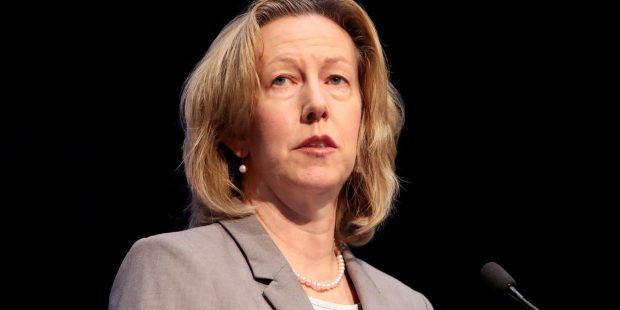
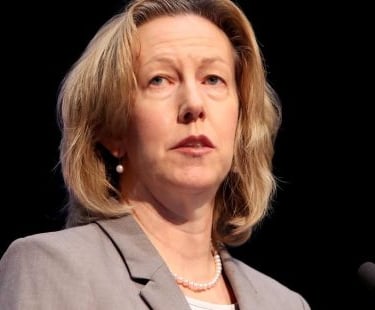
In December 2025, BP announced a landmark leadership appointment: Meg O'Neill, the outgoing CEO of Woodside Energy, will become BP's first-ever female chief executive officer, effective April 1, 2026. This move represents far more than a routine corporate reshuffle. It signals a pivotal moment in how the traditional energy sector is responding to criticism both from climate advocates and from its own stakeholders demanding stronger financial performance and operational discipline.
What makes this appointment particularly noteworthy, however, is the context surrounding O'Neill's controversial public statements about young climate activists. Earlier in 2025, O'Neill publicly criticized young Australians for being hypocritical "zealots" who campaign against fossil fuels while simultaneously indulging in fast fashion and online shopping creating their own carbon footprints in the process. These remarks sparked significant debate about industry accountability, generational divides, and the legitimacy of climate activism versus corporate responsibility.
This blog post explores the full story: who Meg O'Neill is, why her controversial statements matter, what they reveal about the industry's perspective on climate activism, and what her elevation to one of the world's largest oil companies suggests about the future of energy leadership.
Buyer Journey Stage: This content serves a MOFU (Middle of Funnel) and TOFU (Top of Funnel) hybrid audience—readers seeking to understand industry dynamics, leadership philosophies, and the tension between energy security and climate action. Whether you're an investor, energy professional, business analyst, or informed citizen, this post provides critical context for understanding where energy leadership stands in 2025.
Understanding the Controversy: O'Neill's "Zealot" Criticism
What Did Meg O'Neill Actually Say About Climate Activists?
At the Australian Energy Producers Conference in Brisbane in May 2025, Meg O'Neill made remarks that immediately became controversial. She criticized young Australians specifically Gen Y and Gen Z for adopting what she described as an "ideological, almost zealous" view of fossil fuels and renewables.
Her exact words captured the tension between industry and activism:
"Most people hit a switch and expect the lights to come on. It's been a fascinating journey to watch the discussion particularly amongst young people who have this very ideological, almost zealous, view of fossil fuels bad, renewables good. But (they) are happily plugging in their devices, ordering things from Shein and Temu, having one little thing shipped to their house without any recognition of the energy and carbon impact of their actions."
O'Neill's central argument was clear: young climate activists lack awareness of their own carbon footprint while simultaneously campaigning to eliminate fossil fuels. She suggested they were not thinking critically about the energy systems that power their lifestyles from the electricity that charges their devices to the shipping infrastructure that delivers fast-fashion items.
The Activist Response and Escalation
O'Neill's comments did not emerge in a vacuum. Prior to her public criticism, climate activist groups had directly targeted her personally. In August 2023, members of Disrupt Burrup Hub—an activist organization opposing Woodside's expansion on Western Australia's Burrup Peninsula—staged a protest at O'Neill's home, reportedly causing her distress.
Following that incident, O'Neill issued a statement calling the protest an "unacceptable escalation" by "extremists" with "no interest in engaging in respectful and constructive debate." She subsequently took out violence restraining orders against several activists, underscoring the personal toll of the conflict.
Her later public remarks about "zealots" and hypocrisy appeared to be a more calculated response attempting to reframe the debate around logical inconsistencies in activist behavior rather than simply condemning activism itself.
The Hypocrisy Argument: Fast Fashion, Online Shopping, and Carbon Footprints
O'Neill's Core Argument: Inconsistency in Activism
O'Neill's criticism touched on a legitimate tension in modern climate activism: the carbon footprint of consumer behavior versus ideological commitments. Her argument can be summarized as follows:
Energy Dependency Paradox: Young people who criticize fossil fuels depend entirely on energy systems powered by those same fuels.
Consumption Contradiction: Fast fashion retailers like Shein and Temu have massive supply chains and carbon footprints—yet climate-conscious consumers often purchase from them without apparent concern.
Digital Infrastructure Impact: Smartphones, online shopping platforms, and data centers require enormous amounts of electricity, much of which still comes from hydrocarbons in many regions.
Selective Outrage: O'Neill's implication was that activists target fossil fuels as a symbol while ignoring the broader systems that perpetuate their lifestyles.
Marketing Expert Barry Urquhart's Counter-Argument
Marketing Focus managing director Barry Urquhart offered a critical response to O'Neill's framing. Rather than accepting the hypocrisy narrative, Urquhart reframed the issue as one of engagement and leadership responsibility.
His perspective: young people aren't driven by pure ideology they're driven by real-world experiences and visible action. When they see immediate action-reward situations (like fast fashion companies responding instantly to trends), they naturally gravitate toward that model.
Urquhart's key point to O'Neill: "The focus should more be on what she's doing to educate, to reach out, connecting and engage with young people." Rather than dismiss activism as ideologically driven, industry leaders should be working to educate younger generations about the complexity of energy systems and the trade-offs involved in energy transitions.
The Broader Context: Energy Systems and Consumer Behavior
This debate highlights a fundamental tension in modern climate discourse: consumers want to reduce their carbon footprint, but the systems available to them make that extremely difficult. A young person cannot ethically choose to eliminate their electricity use, nor can they easily avoid supporting supply chains with carbon impacts.
From an industry perspective, O'Neill's argument has merit: activists often focus on oil and gas companies while ignoring their own consumption patterns and the energy systems that enable their lifestyles. From an activist perspective, the responsibility lies with systemic change at the industry and policy level, not individual consumer perfection.
Meg O'Neill's Track Record at Woodside Energy
Rising Through the Ranks: From ExxonMobil to Woodside CEO
To understand why BP selected O'Neill, it's essential to examine her credentials and accomplishments. O'Neill is no newcomer to the energy sector she brings over 40 years of combined industry experience.
ExxonMobil Era (1995-2018): O'Neill spent 23 years at ExxonMobil, holding various technical, operational, and leadership positions globally. She worked her way up through the industry, gaining expertise in project management, capital allocation, and operational excellence. She even served as executive advisor to former CEO Rex Tillerson, one of the industry's most prominent and controversial figures.
Woodside Energy Leadership (2018-2025): O'Neill joined Woodside in 2018 as Chief Operating Officer, eventually becoming CEO in 2021 as the world was emerging from the pandemic. During her tenure, she achieved several major milestones:
BHP Petroleum Acquisition: She oversaw the transformative acquisition of BHP Petroleum International, creating a geographically diverse portfolio of high-quality oil and gas assets.
Company Growth: Under her leadership, Woodside became the largest energy company listed on the Australian Securities Exchange.
Project Execution: O'Neill led the company through critical projects including the Scarborough Energy Project, Sangomar Project startup, and Louisiana LNG Project final investment decision.
Strategic Partnerships: She successfully introduced new high-quality partners to Woodside's portfolio, strengthening the company's competitive position.
Operational Performance: Under her leadership, Woodside maintained "continued high performance across Woodside's global operations portfolio."
These accomplishments demonstrate that O'Neill is fundamentally a disciplined operator focused on financial returns and capital allocation—not merely an ideologue.
Why BP Selected O'Neill as CEO
BP's Strategic Rationale: Transformation, Not Transition
BP's board identified O'Neill for a specific reason: the company needed a leader focused on financial discipline, operational excellence, and "business improvement." This is a crucial detail that reveals the industry's current priorities.
BP Chair Albert Manifold's statement was explicit:
"Her proven track record of driving transformation, growth and disciplined capital allocation makes her the right leader for BP. Her relentless focus on business improvement and financial discipline gives us high confidence in her ability to shape this great company for its next phase of growth and pursue significant strategic and financial opportunities. Progress has been made in recent years, but increased rigor and diligence are required to make the necessary transformative changes to maximize value for our shareholders."
Notice what's not in this statement: any reference to aggressive climate action, renewable energy transitions, or carbon neutrality targets. Instead, the focus is on:
Transformation and growth
Disciplined capital allocation
Business improvement and financial discipline
Maximizing shareholder value
Strategic opportunities
BP's board wanted someone who would make the company "simpler, leaner and more profitable." O'Neill's track record suggested she could deliver exactly that focusing on core business fundamentals rather than pursuing expensive, uncertain energy transition initiatives.


The Outgoing CEO Context: Murray Auchincloss Steps Down
To understand why this matters, consider what O'Neill is inheriting. Murray Auchincloss, BP's previous CEO, stepped down after more than 30 years with the company. Auchincloss had attempted to position BP as a leader in the energy transition, setting ambitious net-zero targets and investing in renewable energy.
However, BP's financial performance and stock price lagged competitors. The company faced criticism from multiple directions:
Climate advocates said BP's commitments were insufficient
Fossil fuel advocates argued BP was investing too heavily in renewables and abandoning its core business
Investors questioned whether BP's strategy would generate adequate returns
O'Neill's appointment suggests BP's board has decided the company should refocus on core energy operations and financial performance, rather than attempting to lead the energy transition.
The Broader Energy Transition Debate
Where the Industry Stands on Climate and Energy Security
O'Neill's controversial remarks didn't occur in isolation they reflect a broader shift in how energy industry executives frame their role in the 2025 global energy landscape.
Energy Security Outweighs Climate Concerns: According to research from DNV (a global technical assurance firm), energy security has become the top priority for energy professionals, surpassing climate and affordability concerns. When surveyed in late 2022 and early 2023, energy professionals ranked their priorities as:
Secure energy (first priority)
Clean energy (second priority)
Affordable energy (third priority)
Notably, less than 39% of energy professionals expressed confidence about meeting decarbonization targets, despite overall progress in the energy transition.
The Political Backdrop: "Greenlash" and Pragmatism
O'Neill's remarks also arrived amid a broader political shift. Financial Times editor Ronan Lyons coined the term "greenlash" to describe how rising populism is driving a retreat from environmental targets. In multiple countries from the United States to Australia political movements have pushed back against aggressive climate policies, citing concerns about energy costs, energy security, and industrial competitiveness.
This shift has manifested in concrete ways:
Investment retreats: Major asset managers like BlackRock, State Street, and JP Morgan withdrew from the CA100+ climate governance initiative in 2024, removing approximately $14 trillion in capital commitment.
Oil and gas investment rebound: Following Trump's 2024 election victory, industry executives expressed optimism about renewed investment in drilling and development under policies emphasizing "Drill Baby Drill."
IEA vs. OPEC forecasts: While the International Energy Agency projects peak oil demand by 2029, OPEC forecasts continued robust demand growth, particularly in developing countries.
O'Neill's "zealot" commentary fit neatly into this broader narrative: that climate activism is ideologically driven rather than practically grounded, while energy industry leaders are focused on delivering energy to billions who need it.
Industry Response to O'Neill's Appointment
Celebration Among Energy Traditionalists
O'Neill's appointment as BP's first female CEO was celebrated by industry stakeholders who view her as a pragmatist focused on core business performance rather than aggressive energy transition positioning.
Woodside Energy Chair Richard Goyder praised O'Neill, noting that she leaves Woodside "in a strong position" having successfully navigated multiple major projects and partnerships. His statement notably emphasized her operational track record rather than her climate credentials.
BP's board expressed confidence in her ability to deliver on shareholder value, suggesting the company expects her leadership to focus on financial returns rather than industry leadership on climate action.
Caution Among Climate-Focused Investors
However, climate-focused investors and advocacy groups raised concerns. O'Neill's appointment to lead a company with a stated goal of becoming "simpler, leaner and more profitable" raised questions about BP's commitment to energy transition investments.
The appointment signals that BP may be deprioritizing renewable energy and alternative fuels in favor of optimizing returns from its traditional oil and gas business a concern that aligns with broader "greenlash" trends in 2025.
Critical Perspectives: What Experts Say
The "Zealot" Framing: Fair Critique or Industry Dismissal?
Retail expert Barry Urquhart offered perhaps the most incisive critique of O'Neill's "zealot" framing. Rather than accepting the premise that young activists are ideologically rigid and hypocritical, Urquhart reframed the issue as one of generational communication and industrial responsibility.
His key argument: Young people respond to visible, immediate action. They gravitate toward companies and movements that demonstrate rapid responsiveness to their concerns. Fast fashion succeeds not because it's more ethical, but because it provides instant gratification.
Urquhart's challenge to industry leaders: Instead of dismissing young people as hypocrites, engage them through education and transparent action. Show how energy companies are managing climate impacts. Explain the trade-offs in energy systems. Build trust through communication rather than contempt.
The Disrupt Burrup Hub Perspective
Climate activists who targeted O'Neill directly offered a different critique. The Disrupt Burrup Hub activists, including 19-year-old Tilda Lane-Rose, argued that O'Neill's company bears responsibility for decisions that will have planetary impacts for decades.
Their perspective: Individual consumer choices matter far less than systemic industrial decisions. If Woodside proceeds with multi-billion-dollar gas projects that will emit the equivalent of "24 coal-fired power stations operating for 50 years," individual criticism of fast fashion rings hollow.
The activists' framing that they had "exhausted every other avenue" and felt forced to escalate to civil disobedience suggests that dialogue between industry and younger generations has fundamentally broken down.
Industry Defense: The Energy Trilemma Argument
Energy industry professionals counter that critics overlook the energy trilemma: the simultaneous need for energy that is secure, clean, and affordable.
From this perspective:
Energy security concerns are not illegitimate they arise from real geopolitical risks, supply chain vulnerabilities, and the reality that billions depend on reliable energy access.
Renewables cannot yet reliably replace all fossil fuels without massive storage infrastructure improvements and grid innovations that will take years to develop.
Developing nations still require hydrocarbon energy to lift populations out of poverty and support basic services.
Aggressive phase-out timelines risk economic harm without viable alternatives in place.
From this vantage point, O'Neill's argument isn't dismissive it's pragmatic. Energy companies provide essential services. Climate activists benefit from those services while criticizing the providers.
The Future of Energy Leadership
What O'Neill's Appointment Signals About Industry Direction
Meg O'Neill's elevation to BP CEO signals a decisive turn in energy industry leadership philosophy. The appointment suggests:
Financial Performance Over Energy Transition Leadership: BP is prioritizing becoming "simpler, leaner and more profitable" rather than positioning itself as an energy transition leader.
Operational Excellence as Core Competency: O'Neill was selected primarily for her capital discipline and operational expertise, not for renewable energy credentials or climate innovation.
Pushback Against "Greenlash": The appointment reflects broader industry skepticism toward aggressive climate commitments that may not generate shareholder returns.
Industry Consolidation Around Traditional Energy: With major players like BP and Woodside refocusing on core oil and gas operations, the energy transition appears to be bifurcating into separate tracks with traditional energy companies defending fossil fuels and specialized renewable companies handling the transition.
Implications for Investors and Stakeholders
For traditional energy investors, O'Neill's appointment is positive suggesting BP will refocus on the fundamentals that generate returns: capital discipline, operational excellence, and core business optimization.
For climate-focused investors, the appointment is concerning suggesting that even major energy companies are retreating from aggressive climate commitments in favor of "greenlash" pragmatism.
For younger generations concerned about climate change, O'Neill's leadership at BP represents the industry's perspective: that activists are ideologically driven rather than practically focused, and that the industry, not activists, will ultimately determine the pace of energy transition.
Key Takeaways
✅ Meg O'Neill criticized young climate activists as "zealous" hypocrites who campaign against fossil fuels while consuming fast fashion and energy-intensive services.
✅ Her criticism highlighted real tensions in consumer behavior and carbon footprints, but overlooked the responsibility of large energy companies to lead systemic change.
✅ O'Neill's appointment as BP CEO signals a strategic shift toward financial discipline and core business optimization rather than energy transition leadership.
✅ Industry is experiencing "greenlash"—a political and financial retreat from aggressive climate commitments in favor of energy security and pragmatism.
✅ The dialogue between energy industry and younger generations has deteriorated, with activists escalating to civil disobedience and industry executives dismissing activism as ideological.
✅ Energy security concerns are legitimate, but so are concerns about the climate and systemic impacts of new fossil fuel projects.
Frequently Asked Questions {#faq}
Q1: What exactly did Meg O'Neill say about young climate activists?
O'Neill described young Australians as having an "ideological, almost zealous" view of fossil fuels, accusing them of being hypocritical campaigning against fossil fuels while ordering items from Shein and Temu and using energy-intensive devices without recognizing the carbon impact.
Q2: Why did O'Neill's comments spark so much controversy?
The comments were controversial because they appeared dismissive of legitimate climate concerns while focusing on lifestyle hypocrisy rather than engaging with substantive arguments about energy systems and climate impacts.
Q3: What is Meg O'Neill's background?
O'Neill spent 23 years at ExxonMobil before joining Woodside in 2018 as COO, eventually becoming CEO in 2021. She has over 40 years of combined energy industry experience.
Q4: Why did BP select Meg O'Neill as its new CEO?
BP's board selected O'Neill for her "proven track record of driving transformation, growth and disciplined capital allocation" and her focus on "business improvement and financial discipline." The board wanted a leader focused on financial performance rather than energy transition leadership.
Q5: What is the "energy trilemma"?
The energy trilemma refers to the simultaneous challenge of delivering energy that is secure, clean, and affordable. Energy industry leaders argue that all three objectives are difficult to achieve simultaneously, particularly within aggressive climate transition timelines.
Q6: What is "greenlash"?
"Greenlash" refers to a political and financial retreat from aggressive climate commitments, driven by rising populism and concerns about energy security and costs. It's a pushback against what some perceive as excessive climate activism.
Q7: When does Meg O'Neill become BP CEO?
O'Neill will become BP CEO effective April 1, 2026. Until then, Carol Howle will serve as interim CEO.
Q8: What happened with the Disrupt Burrup Hub activists who targeted O'Neill?
Young climate activists from Disrupt Burrup Hub staged a protest at O'Neill's home in August 2023, and several were arrested. O'Neill took out violence restraining orders against some of them. The incident escalated tensions between O'Neill and climate activists.
Q9: Does O'Neill support energy transition initiatives?
Based on her appointment rationale and public statements, O'Neill appears more focused on financial discipline and core business optimization than on aggressive energy transition initiatives. However, she has stated her intention to "drive innovation and sustainability" at BP.
Q10: What does O'Neill's appointment mean for BP's climate commitments?
O'Neill's appointment suggests BP will likely deprioritize renewable energy investments in favor of optimizing returns from traditional oil and gas operations a retreat from the aggressive energy transition positioning under previous leadership.
Final Thoughts: Bridging the Industry-Activism Divide
Meg O'Neill's elevation to BP CEO represents a pivotal moment in energy industry leadership. Her appointment signals that major oil and gas companies are not retreating from energy production; they're refocusing on financial discipline and operational excellence.
Yet her controversial criticism of young climate activists also reveals a troubling communication breakdown. The industry and younger generations are increasingly talking past each other—the industry dismissing activism as ideological, activists viewing industry positions as self-interested denial.
The path forward requires genuine dialogue, not dismissal. Energy industry leaders must educate consumers about the complexity of energy systems and the real trade-offs involved in energy transitions. Simultaneously, climate advocates must acknowledge the legitimate role of traditional energy companies in meeting global energy demand while pursuing decarbonization strategies.
O'Neill's leadership at BP will test whether a focus on financial discipline alone can navigate this complex landscape. Her success or failure will shape not only BP's future, but the broader relationship between traditional energy companies and the stakeholders demanding climate action.
About the author
Rudra Prakash Parida is a Financial Professional with an MBA in Business Administration and ACCA qualifications. He specialises in corporate tax planning, SME finance optimisation, and marketing analytics for growth-stage businesses. Through Growth Analytics Hub, he helps UK entrepreneurs and business owners unlock tax efficiency strategies and build data-driven growth systems.

Subscribe to our newsletter
Enjoy exclusive special deals available only to our subscribers.
Contact
Reach out for insights and support
Phone
+447768010239
© 2025. All rights reserved.