
Understanding Corporate Tax Credits 2025: The Complete Guide to UK Business Relief Schemes
Maximize your business tax relief in 2025. Explore R&D credits, capital allowances, EIS, and VCT schemes. Complete guide to UK corporate tax credits eligibility and claims.
FINANCE
Rudra Prakash
12/8/202521 min read


Professional entrepreneurs presenting growth strategy and investment opportunity to venture capital investors in modern boardroom
Key Insight: UK businesses leave an estimated £2-5 billion in unclaimed tax credits annually. In 2025, the average eligible company could recover £15,000-£250,000 through strategic relief claiming, yet 40% of qualifying businesses never file claims. This comprehensive guide reveals which credits apply to your situation, how to calculate savings, and the step-by-step process to claim efficiently.
The Big Picture: What Are Corporate Tax Credits and Why They Matter Now
Corporate tax credits are government-backed financial incentives that reduce your company's tax bill or generate direct cash refunds when you undertake specific business activities. Unlike passive deductions that simply reduce taxable profits, modern relief schemes like R&D credit directly refund cash to your company, making them exceptionally valuable even when your business is loss-making.
The fundamental distinction matters: Traditional tax deductions reduce your profit before calculating tax (if you earn £100,000 and claim £20,000 deduction, you're taxed on £80,000). Tax credits work differently they reduce the actual tax you owe or generate cash payments. A £20,000 R&D credit directly reduces your corporation tax liability by £20,000, or generates a £20,000 refund if your tax bill is lower.
The government introduced and enhanced these schemes because research, investment, and entrepreneurship drive economic growth. By making innovation and capital investment financially attractive, tax credits incentivize business behaviors that generate employment and productivity gains. For your business, this means the government essentially subsidizes innovation and expansion if you're making investments anyway, strategic relief claiming means the government effectively covers 15-40% of those costs.
Why this matters in 2025 specifically: The November 2025 Autumn Budget introduced substantial changes—capital allowance reforms, venture capital relief enhancements, and relief rate adjustments creating new planning opportunities. Simultaneously, HMRC's audit focus on relief claims has intensified, making compliant, well-documented claims essential. The convergence of enhanced opportunities and stricter compliance creates a critical moment for strategic planning.


The Relief Landscape: Five Major Tax Credits Available to UK Businesses
Understanding Relief Type 1: Research & Development (R&D) Tax Relief The Most Valuable
R&D tax relief generates more refunds than any other business relief scheme in the UK. The April 2024 merger of SME and Large Company schemes into a single Merged R&D Relief Scheme simplified access while maintaining differentiated rates based on company profitability.
How the rates work:
Profitable companies claim 16.2% cash credit on qualifying R&D spending. If your company spends £100,000 on qualifying R&D, you receive a £16,200 refund or tax reduction. Loss-making, R&D-intensive SMEs access the enhanced ERIS scheme offering 27% cash credit meaning a £100,000 spend generates £27,000 refunded cash. This distinction makes R&D relief exceptionally valuable for startups and development-stage companies investing heavily in product creation whilst operating at losses.
What qualifies as R&D? This represents the most common confusion. R&D doesn't mean laboratory work or formal research programs. It means systematic investigation activities that overcome technological uncertainty challenges that competent professionals in your industry cannot readily resolve using standard approaches.
Real examples include: manufacturing firms developing new production techniques and materials; software companies building custom solutions addressing novel technical problems; food manufacturers experimenting with ingredient combinations and processing methods; engineering firms designing specialized equipment; pharmaceutical companies developing formulations. Crucially, the development must overcome genuine technical challenges; routine engineering, standard implementation, or normal operational improvement doesn't qualify.
Cost categories that qualify:
Direct staff costs (employee salaries, including management and administrative staff spending qualifying time on R&D projects); materials and consumables used in experimental work; subcontracted R&D activities; software developed specifically for R&D; energy and utilities used during R&D; equipment depreciation on assets used in R&D; professional fees for R&D design work.
The April 2024 scheme change eliminated previous restrictions around claiming relief alongside public grants a material simplification permitting businesses to access both funding sources without surrender of relief claims.
Practical calculation example:
A software development company spending £250,000 annually on developing custom enterprise solutions for clients faces this analysis: If profitable, the company claims 16.2% credit (£40,500 tax benefit). If loss-making and R&D-intensive, it accesses ERIS rate (27%), generating £67,500 direct cash refund. For a loss-making company, this £67,500 refund effectively funds an additional developer or extends runway by several months a material business impact flowing directly from relief structure optimization.
Relief Type 2: Annual Investment Allowance (AIA) Accelerated Depreciation
The Annual Investment Allowance permits immediate deduction of up to £1 million in capital expenditure annually, rather than spreading deductions across multiple years. This acceleration dramatically improves cash flow and simplifies investment analysis.
Qualifying assets include:
Plant and machinery (production equipment, machinery, tools, and specialist manufacturing systems); office technology and computing hardware; commercial vehicles and specialized transport (excluding most passenger cars due to emissions restrictions); integral building features (lighting systems, HVAC, water systems); professional fixtures and fittings specific to business operations.
The mathematics of acceleration:
Traditional capital allowances spread deductions across years a £100,000 equipment investment might generate £18,000 deduction year one, declining each subsequent year (under writing-down allowance methodology). The AIA generates the full £100,000 deduction immediately. At 25% corporation tax rate, this means £25,000 tax relief in year one versus £4,500 under standard allowances. The difference £20,500 improves cash flow and reduces financing needs for expansion.
Critical boundaries: The AIA only applies to business assets purchased outright by your company (not leased assets, except under specific lease-buy arrangements). Assets purchased from connected parties (related companies, directors, or family members) don't qualify the system prevents tax avoidance through related-party transactions. You must genuinely purchase qualifying assets for business use; investment-only assets don't qualify.
For businesses exceeding £1 million: Expenditure beyond the annual allowance attracts standard capital allowances (the new 40% first-year allowance from January 2026, then writing-down allowances). Strategic investment timing concentrating expenditure in single years versus spreading across years materially impacts relief realization, particularly for large-scale capital programs.
Relief Type 3: Enterprise Investment Scheme (EIS) Growth Capital Incentives
The Enterprise Investment Scheme supports company growth by making private investment financially attractive for individual investors. From a business perspective, if you're raising growth capital, understanding EIS mechanics helps structure fundraising more compellingly.
The investor perspective (why it matters to you):
Individual investors receive 30% income tax relief on EIS investments (reducing to 20% from April 2026) they can invest £100,000 and reduce personal tax liability by £30,000. Capital gains on EIS shares held five+ years are completely tax-free. These incentives make investing in your company substantially more attractive to potential backers, improving your fundraising success.
Investment limits (as of 2025 Budget):
Companies can raise £10 million annually through EIS (£20 million for knowledge-intensive firms), with £24 million lifetime cap (£40 million for knowledge-intensive companies). The November 2025 Budget doubled these limits, directly reflecting government confidence in venture-backed business growth.
Qualifications your business must meet:
Your company must be an unquoted trading company (not listed on stock exchanges) carrying on qualifying trade activity. Employee count must be fewer than 250 (500 for knowledge-intensive companies). Gross assets must remain below £15 million at investment time (£20 million for knowledge-intensive firms). You cannot have previously raised more than the lifetime investment limits through venture capital schemes.
Why the 2025 Budget changes matter: Doubling investment limits signals government commitment to venture capital as growth mechanism through 2035. For businesses seeking growth capital, this expanded capacity makes EIS-backed fundraising increasingly viable investors understand that EIS incentives continue long-term, making early-stage investment more attractive.
Relief Type 4: Venture Capital Trust (VCT) Tax-Efficient Passive Investment
Venture Capital Trusts enable individual investors to subscribe for VCT shares, receiving substantial tax breaks while VCTs hold portfolios of early-stage company shares. For businesses seeking expansion capital, understanding VCT investor incentives helps identify potential funding sources.
The current rate urgency (April 2026 deadline):
VCT investors currently receive 30% income tax relief on subscriptions up to £200,000 annually. This rate reduces to 20% from April 2026. The reduction creates genuine urgency investors seeking to lock in 30% relief must subscribe before April 6, 2026. This deadline creates material opportunity for businesses targeting VCT-backed funding during tax year 2025/26.
Tax-free income and gains:
VCT shares generate completely tax-free dividend income once held five+ years. Capital gains on VCT share sales are entirely tax-exempt. For investors, this transforms 30% initial relief into a multi-year tax shelter making VCT investment exceptionally attractive relative to other investment options. For your business seeking capital, this attractiveness translates to improved funding accessibility.
Relief Type 5: Creative Industry Tax Reliefs Film, Television, and Visual Effects
UK creative industry tax reliefs support film, television, and visual effects production. If your business operates in creative sectors, understanding these specialized reliefs reveals material savings opportunities.
Film and television relief rates:
UK production companies claim 29.25% net relief on qualifying expenditure. VFX-intensive productions access enhanced relief the government raised VFX caps from 80% to unlimited in 2024, reflecting commitment to VFX industry growth. These rates generate substantial refunds; a £5 million film budget with £2 million qualifying UK spend generates approximately £585,000 in direct relief.
What qualifies:
UK-sourced expenditure on production staff, facilities, equipment hire, and post-production services qualify. Non-UK expenditure (foreign location shooting, overseas crew hiring) doesn't qualify. The relief incentivizes production decisions favoring UK services and employment, making UK production bases economically attractive for international productions.
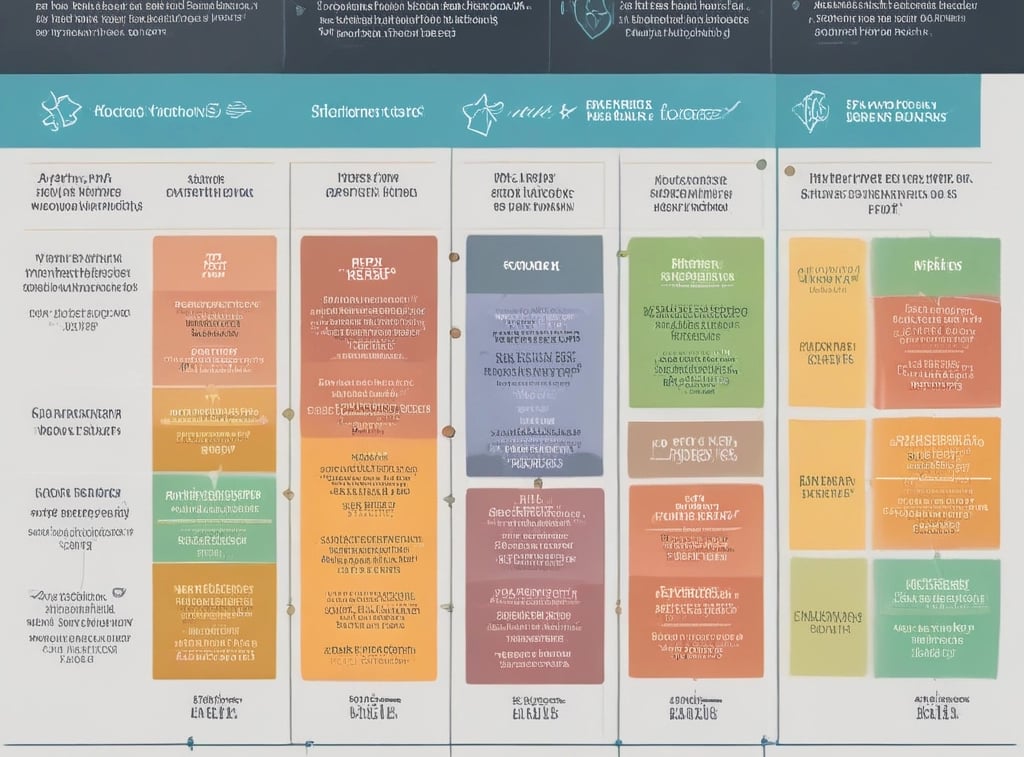
The Relief Comparison Framework: The chart above visualizes how different reliefs compare across key dimensions maximum annual benefit, qualifying activities, implementation methods, and eligible company types. Reviewing this comparison clarifies which reliefs might apply to your specific business situation.
Identifying Your Qualification: A Practical Decision Framework
Not every relief applies to every business. The MOFU decision-maker must systematically evaluate which credits merit investigation and claiming.
Step 1: Verify you're a corporation tax subject.
All business reliefs require Corporation Tax liability. Limited companies, private companies limited by guarantee, and corporate partnership members can access reliefs. Sole traders, traditional partnerships, and most unincorporated entities cannot. This foundational criterion eliminates roughly 35% of UK business entities from relief access.
Step 2: Match your activities to relief mechanisms.
Does your company develop new products, services, or processes? You potentially qualify for R&D relief. Are you planning capital equipment purchases for business operations? Annual Investment Allowance likely applies. Seeking growth capital from private investors? EIS and VCT mechanisms exist. Operating in creative sectors? Specialized reliefs may provide superior benefits. Most substantial businesses qualify for multiple reliefs simultaneously—the strategic challenge involves identifying all applicable reliefs and calculating combined benefits.
Step 3: Assess your company profitability status.
R&D relief rates differ based on profitability; loss-making R&D-intensive SMEs access 27% rates versus 16.2% for profitable companies. Your profitability also determines whether generated credits translate to direct tax refunds (loss-making companies receive refunds when claims exceed tax liability) versus tax reductions (profitable companies offset corporation tax liability). This distinction dramatically impacts cash flow timing and funding implications.
Step 4: Calculate preliminary benefits.
Once you've identified applicable reliefs, quantifying expected benefits informs investment decisions. A £300,000 equipment investment generates £75,000 Annual Investment Allowance benefit (25% corporation tax rate). A £150,000 R&D investment generates £24,300-£40,500 depending on profitability and relief scheme. Combined benefits of £99,300-£115,500 materially influence whether investments represent positive business decisions.


How to Claim: The Practical Process and Timelines
Understanding relief availability differs fundamentally from successfully claiming relief. The process involves specific forms, documentation requirements, and critical deadlines.
R&D Tax Relief: Step-by-Step Claiming Process
For first-time claimants:
The process involves eight sequential steps that collectively require 4-8 weeks (depending on documentation preparation).
Step 1: Verify HMRC project eligibility. Describe your R&D projects with specificity what was the business objective, what technological uncertainty did you face, what approaches did you try, and what did you overcome? HMRC requires detailed project descriptions; vague descriptions trigger challenges.
Step 2: Gather supporting documentation. Compile project logs documenting timeline and activities; cost allocation spreadsheets assigning expenditure to specific projects; technical documentation describing approaches attempted; meeting notes discussing challenges and solutions; contemporaneous emails addressing technical problems. This documentation should be genuine contemporaneous records, not retrospective reconstruction HMRC distinguishes sharply between real-time documentation and post-hoc narrative.
Step 3: Submit claim notification (if applicable). First-time claimants must submit claim notification to HMRC between specified dates (varies by accounting period). This notification establishes HMRC awareness of your intent to claim, triggering their assessment process. Timeline: Notification deadline is typically 6 months after your accounting period end.
Step 4: Complete Additional Information Form (AIF). This form gathers detailed R&D information project descriptions, expenditure breakdown, R&D intensity calculation (if claiming under ERIS scheme). The form is thorough and typically requires 8-12 hours to complete properly. Rushing the AIF creates claims vulnerable to HMRC challenge.
Step 5: Prepare R&D tax credit report. Your accountant or R&D specialist prepares a detailed report calculating qualifying expenditure and relief claims. This report substantiates your position if HMRC subsequently audits the claim.
Step 6: Complete tax computation. Your accountant integrates R&D relief into standard corporation tax calculations, adjusting taxable profit by claimed R&D expenditure relief.
Step 7: File company tax return with claim. The corporation tax return (CT600 form and supporting schedules) includes your R&D relief claim. The return must be filed by the standard corporation tax filing deadline (typically 12-14 months after accounting period end for companies filing online).
Step 8: Monitor HMRC processing. HMRC processes claims, potentially requesting additional information or clarification. First-time claims often trigger queries as HMRC's systems identify new claimants.
Timeline and cash flow: Straightforward R&D claims generate refunds or tax adjustments within 3-6 months of company tax return filing. Claims triggering HMRC queries extend to 12+ months. For loss-making companies, R&D refunds represent material cash injections; understanding processing timelines informs cash flow forecasting.
Annual Investment Allowance: Straightforward Claiming
Claiming AIA requires substantially less process complexity than R&D relief.
The simple approach:
Identify qualifying capital assets purchased during your accounting period. Obtain purchase invoices confirming purchase date and cost. Confirm assets are used for business purposes (not personal use) and not purchased from connected parties. Calculate total qualifying spend (up to £1 million limit per 12-month accounting period). Include this amount in your company tax return's capital allowances computation.
That's the complete process. AIA requires no advance notification, no Additional Information Forms, no detailed reports. Your accountant includes it in routine tax return preparation. The simplicity reflects that AIA represents relatively straightforward relief the challenge isn't compliance complexity, but ensuring you identify all qualifying assets and don't miss opportunities through oversight.
Documentation requirements:
Maintain purchase invoices and payment records. Document asset location and business purpose. Retain records for at least six years (standard tax record retention period). This documentation supports your position if HMRC subsequently questions asset qualification.
EIS and VCT: Investment Structuring
Claiming relief through EIS and VCT involves different process sequencing you must structure investment rounds correctly before relief becomes available.
EIS claiming process (from business perspective):
Your company must first obtain Advance Assurance from HMRC confirming likely EIS qualification. This application requires: detailed business plan; financial projections; information about how invested funds will be used; confirmation of company employee count, gross asset value, and prior venture capital funding; evidence that your company meets EIS trading company requirements.
Timeline for Advance Assurance: HMRC typically responds within 7-8 weeks. Once received, investors become willing to subscribe because HMRC's advance assurance substantially reduces their risk of relief denial.
After investors subscribe for shares and your company receives investment funds, you must file an EIS1 Compliance Statement (earliest four months after investment) confirming that investment meets EIS requirements. HMRC responds with EIS2 certification—this certificate is critical because investors use it to substantiate their relief claims to HMRC.
Real-World Examples: How Different Businesses Maximize Relief
Manufacturing Innovation: Realizing Combined R&D and Capital Reliefs
A mid-market manufacturing business (£8 million turnover) invested £630,000 over 18 months: £450,000 in new production equipment and £180,000 on R&D activities developing proprietary manufacturing techniques.
Relief calculation:
Annual Investment Allowance on equipment: £450,000 × 25% tax rate = £112,500 tax benefit. R&D credit on development costs (profitable company, 16.2% rate): £180,000 × 16.2% = £29,160 direct credit.
Total financial benefit: £141,660 reducing net investment cost from £630,000 to £488,340 effectively subsidizing 22.5% of total investment.
Process and effort: The business allocated one staff member (10% time) to maintaining R&D project records, time tracking, and cost allocation. This modest administrative investment generated £29,160 in annual refunds a 200:1 return ratio relative to implementation costs.
Strategic impact: The identified relief enabled equipment investments and R&D expansion that tight cash flow would otherwise have precluded. Within 24 months, the new equipment increased production capacity 35%, generating £180,000 in additional annual profit demonstrating how tax relief strategically supports growth timing.
Software Firm: Loss-Making R&D Intensive Scenario
A software development startup spent £320,000 developing enterprise solutions whilst operating at £150,000 loss (normal for development-stage companies).
Relief analysis:
The startup qualified for ERIS scheme (enhanced R&D intensive support) at 27% rate: £320,000 × 27% = £86,400 cash refund. This refund exceeded the company's corporation tax liability, generating material cash injection to fund extended runway and hiring.
Impact: The £86,400 refund without requirement to be profitable extended the company's runway by approximately four months, enabling hiring of additional developers and accelerating time-to-product-market. For development-stage companies, ERIS relief often represents the difference between success and failure; it subsidizes the loss-making period before commercialization revenue begins.
Glassware Manufacturer: Traditional Business Recognizing Hidden R&D
Dartington Crystal, producing bespoke high-end glassware, initially didn't consider itself an R&D business. However, detailed analysis revealed that custom commission work—creating unique designs, experimental finishes, and innovative shapes constituted qualifying R&D activity.
Realization: By claiming R&D relief on relevant staffing and material costs, the company unlocked significant tax benefits. More importantly, the discipline required for R&D claim documentation (tracking projects, documenting technical challenges, maintaining cost records) enhanced management focus on genuine innovation, creating organizational benefits beyond immediate tax savings.
Key insight: R&D relief applies far more broadly than commonly recognized. Manufacturing, engineering, food production, and traditional craft businesses often undertake qualifying R&D without recognizing eligibility. Detailed examination of your actual business activities (not generic industry assumptions) frequently reveals unexpected relief opportunities.
Common Mistakes: Protecting Your Claims Through Proper Practice
Despite relief availability, systematic errors undermine many claims, triggering HMRC challenges that consume management attention and potentially reverse relief claims.
Mistake 1: Inadequate Documentation
HMRC requires detailed evidence substantiating relief claims. Businesses maintaining vague records face aggressive audit questioning; contemporaneous, specific documentation survives scrutiny.
What HMRC looks for:
Detailed project descriptions (not generic statements like "developing new software"); technical documentation explaining challenges encountered; genuine contemporaneous records (email trails, meeting notes, project logs created in real-time); cost allocation spreadsheets linking specific expenditure to specific projects; evidence of technological uncertainty investigation (describing what competent professionals couldn't readily solve).
Common failure: Businesses reconstruct R&D narratives months after project completion, during tax return preparation. HMRC's assessors detect these retrospective constructions; contemporaneous documentation proves genuineness. From project initiation, maintain actual project records—this practice simultaneously improves business management discipline whilst facilitating future relief claims.
Mistake 2: Misclassifying Normal Operations as R&D
Not all development qualifies; routine engineering improvements, standard manufacturing processes, and normal professional service delivery typically don't constitute R&D.
The qualification test: Does the activity overcome technological uncertainty that competent professionals in your industry cannot readily resolve using standard approaches? If the answer is "no" if your approach represents normal industry practice R&D relief doesn't apply.
Common misclassifications:
Software implementation (customizing existing software to your business)—typically not R&D. Standard manufacturing process improvements—typically not R&D. Problem-solving within the normal scope of your industry—typically not R&D. Custom system development solving novel technical problems—is R&D. New material formulations solving specific technical challenges—is R&D. Experimental production techniques addressing manufacturing constraints—is R&D.
The distinction turns on genuine technical novelty; claiming relief for normal operations triggers HMRC disallowance of inflated claims.
Mistake 3: Overlooking Timing and Deadline Compliance
Critical deadlines govern relief claiming; missing deadlines results in forfeited relief.
Key deadlines:
R&D relief claims must be filed as part of company tax returns by standard corporation tax filing deadline (typically 12-14 months after accounting period end). First-time R&D claimants must submit claim notification within specified windows (6 months after accounting period end, varies by period length). AIA claiming requires no advance notification but must be included in tax return by filing deadline. Missing these deadlines often means permanently forfeiting relief; HMRC rarely grants late relief claims.
Practical implication: Businesses should notify their accountants of anticipated relief claims at least 3-4 months before tax return filing deadline, permitting adequate time for documentation gathering, form completion, and integration into tax computations.
Mistake 4: Inadequate Cost Allocation
R&D relief calculation requires precise cost allocation between qualifying and non-qualifying activities. Businesses unable to substantiate allocations face HMRC disallowance of claimed amounts.
The allocation challenge:
Staff often work on mixed projects (some qualifying, some not). Materials may be used across multiple projects. Facility costs (rent, utilities) benefit both R&D and non-R&D activities. Accurate allocation requires systematic cost tracking from inception.
Example allocation error: A software company claims 100% of developer salaries as R&D relief, allocating no time to non-qualifying activities (client support, administrative work, standard development). HMRC challenges this, arguing developers spend meaningful time on non-qualifying work. Lacking time records, the company cannot substantiate its allocation, resulting in HMRC disallowance of substantial claimed amounts.
Correct approach: Implement time tracking from project initiation. Developers record time spent on specific projects. Monthly payroll allocation divides employee costs across projects based on actual time allocation. This systematic approach provides documentary evidence supporting allocation claims.


Strategic Planning: Advanced Optimization Techniques
Sophisticated businesses move beyond basic claiming toward comprehensive relief optimization coordinating multiple reliefs, timing investments strategically, and structuring transactions for optimal relief realization.
Coordinate Multiple Relief Opportunities
Most capital investments trigger multiple reliefs simultaneously. Identifying and claiming all applicable reliefs prevents unintended under-claiming.
Example coordination:
A manufacturing business invests £1.8 million in equipment and £200,000 on R&D development. The business can claim:
Annual Investment Allowance on first £1 million equipment cost: £250,000 tax benefit
40% First Year Allowance on remaining £800,000 (from January 2026): £200,000 additional relief
R&D tax credit on £200,000 development (16.2% rate, profitable company): £32,400
Total integrated benefit: £482,400 versus approximately £375,000 if reliefs were claimed separately without coordination. The £107,400 difference in relief realization represents real cash impact flowing from comprehensive planning.
Time Investments for Optimal Relief Realization
Tax year boundaries create planning opportunities. Strategic investment timing can meaningfully improve relief claims.
Loss-making business scenario: If your company operates at loss in 2024/25 but expects profitability in 2025/26, timing R&D investments for the profitable year ensures relief generates tax reduction immediately rather than carried-forward losses. Similarly, capital investments generating substantial depreciation can offset expected profit peaks.
Practical approach: Finance major investments alongside profitability projections. If profitability is anticipated, investment timing can be adjusted to align with profitable periods, maximizing relief value realization.
R&D Intensity Designation and Enhanced Relief Access
Companies exceeding 30% qualifying R&D expenditure (as proportion of total costs) can designate as "R&D intensive," unlocking enhanced relief rates and increased venture capital fundraising limits.
Calculation: If your company spends £3 million total and £1 million qualifies as R&D, your R&D intensity is 33% (above 30% threshold). Formal designation triggers: superior relief rates (27% cash credit instead of 16.2% for profitable companies); increased EIS/VCT fundraising limits (£2 million annually instead of £1 million).
Strategic assessment: Businesses with substantial R&D operations should calculate R&D intensity ratios and formally designate if thresholds are exceeded often this requires no operational changes, merely formal HMRC notification.
Venture Capital Structuring for Multiple Funding Mechanisms
Sophisticated growth businesses access capital through coordinated venture capital mechanisms—each offering distinct investor incentives and business benefits.
Multi-mechanism approach:
Initial seed funding via SEIS (Seed Enterprise Investment Scheme) generating 50% income tax relief for angel investors; Series A funding via EIS generating 30% relief (20% from April 2026); later-stage institutional funding via VCT generating 30% relief with capital gains exemptions. Each mechanism serves distinct investor types and funding stages, with combined benefits exceeding any single mechanism alone.
The Future: Policy Changes and What to Monitor
Business tax relief policy continues evolving. Several anticipated changes merit monitoring for planning implications.
Planned Changes Coming in 2026
Venture capital relief rate reductions:
From April 6, 2026, EIS and VCT income tax relief reduces from 30% to 20%—effectively reducing investor incentives and potentially impacting fundraising attractiveness. Businesses targeting venture capital should plan funding rounds before April 2026 if possible to benefit from higher relief rates.
Capital allowance reforms:
From January 2026, the new 40% first-year allowance becomes available on main rate expenditure (approximately 80% of capital assets). From April 2026, writing-down allowances reduce from 18% to 14%, reducing long-term relief on capital assets not qualifying for first-year allowances. These changes make strategic investment timing increasingly important.
Dividend tax rate increases:
From April 2026, dividend tax rates increase by 2 percentage points across ordinary and higher rate bands, affecting profit extraction decisions for owner-managed businesses.
Government Commitment to Venture Capital Through 2035
The government has signaled ongoing commitment to venture capital schemes through 2035, suggesting relief structures will remain stable long-term. This commitment underpins business confidence that venture capital schemes represent permanent, reliable fundraising mechanisms rather than temporary incentives.
FAQ: Addressing Your Remaining Questions
Q: Can I claim R&D relief if my development project failed commercially?
A: Yes, absolutely. Relief applies for systematic investigation activities regardless of commercial outcomes. Failed R&D projects, abandoned prototypes, and unsuccessful experiments all qualify provided documentation demonstrates genuine technological uncertainty investigation. The government incentivizes innovation; commercial failure doesn't disqualify investigation that genuinely advanced your technical knowledge.
Q: Does my company need to report R&D activities to HMRC before filing tax returns?
A: First-time claimants must submit claim notification to HMRC by specified deadline (varies by accounting period typically 6 months after period end). Subsequent claims require no advance notification; you can file claims directly via tax return. However, advance notification for EIS and SEIS investments is typically wise to confirm HMRC qualification.
Q: If I buy equipment second-hand, does it still qualify for Annual Investment Allowance?
A: Yes, provided it hasn't been previously owned by your business. Second-hand assets from third parties qualify for AIA relief. However, assets purchased from connected parties (related companies, directors, family members) don't qualify the system prevents tax avoidance through related-party transactions.
Q: Can R&D staff working on mixed projects (some qualifying R&D, some not) be allocated as R&D expenditure?
A: Yes, but only the time/costs genuinely spent on qualifying R&D projects. This requires time tracking or reasonable allocation methodology substantiating what percentage of employee time addresses qualifying activities. Businesses allocating 100% of mixed-project employee costs as R&D face HMRC challenge unless they can demonstrate meaningful time records.
Q: Will I definitely receive a cash refund for R&D relief if my company is loss-making?
A: Loss-making companies can typically claim cash refunds, but specific conditions apply. The relief must exceed your corporation tax liability (which may be minimal if you're loss-making). Additionally, you must have filed tax returns on time and maintained compliant records. HMRC doesn't automatically refund relief claims; you must file company tax returns with relief claimed, and HMRC processes refunds via standard tax assessment procedures.
Q: How long should I keep documentation supporting R&D relief claims?
A: HMRC's standard record retention requirement is six years from the end of the accounting period. Practically, maintaining documentation for 6+ years ensures you can respond to any HMRC audit queries. Digital storage (scanned invoices, email archives) reduces storage burden while maintaining accessibility.
Q: Can I claim R&D relief and government grants for the same project?
A: Yes, the April 2024 merged scheme eliminated previous restrictions. You can now claim R&D relief on costs even if you've received subsidized grants or government funding for the same project. This change materially improved relief accessibility for publicly-funded research and development.
Q: When should I engage a specialist advisor versus relying on my accountant?
A: For straightforward claims (R&D spend under £50,000, simple AIA calculations), competent accountants suffice. For substantial claims (R&D spending exceeding £100,000, complex cost allocations, venture capital structuring), specialist R&D and tax advisors provide material value through optimization and audit protection. The advisor cost is typically recovered through superior claim structuring within the first year.
Action Steps: Your Next Moves
The distinction between understanding corporate tax credits and benefiting from them lies in execution. Concrete action steps translate knowledge into financial results.
Immediate Actions (This Month)
1. Audit your current relief position. Review your company's last three years of tax returns. Identify any unclaimed relief opportunities particularly R&D spending that you didn't claim, capital investments made without AIA calculation, or growth capital raised without considering EIS/VCT structures.
2. Categorize recent and planned business activities. Prepare a spreadsheet listing: Recent R&D projects or technology development activities (with estimated costs); planned capital investments or equipment purchases; any fundraising plans or growth capital requirements; creative industry activities (if applicable).
3. Calculate preliminary benefit estimates. For each identified relief opportunity, calculate ballpark financial benefits using the rates discussed: R&D at 16.2% (profitable) or 27% (ERIS); AIA at 25% corporation tax equivalent; capital allowances at new 40% FYA (from January 2026).
Medium-Term Actions (Next 1-3 Months)
4. Engage appropriate advisors. Schedule consultations with your accountant (all businesses) and R&D specialists (if R&D claims exceed £50,000). Clarify qualification criteria, documentation requirements, and specific deadlines applying to your circumstances.
5. Implement documentation practices. For any identified R&D activities, establish contemporary record-keeping: project logs documenting timeline and technical challenges; cost allocation tracking; meeting notes discussing development; email records addressing technical problems. These practices simultaneously improve business management discipline whilst facilitating future relief claims.
6. Establish relief claim timeline. Determine your company's tax year-end and filing deadline. Mark critical relief claim deadlines (particularly R&D claim notification deadlines typically 6 months after year-end for first-time claimants).
Strategic Actions (3-12 Months)
7. Structure planned investments for relief optimization. Any major capital investments or fundraising activities should be evaluated for integrated relief optimization coordinating multiple reliefs, timing investments strategically, and structuring transactions for maximum relief realization.
8. Review annual relief eligibility. Establish annual practice of reviewing relief eligibility and claiming requirements as business circumstances and tax policy evolve. Relief rates, investment limits, and qualification criteria change periodically; annual review ensures you remain current on available opportunities.
Final Summary: Why Corporate Tax Credits Matter to Your Business
Corporate tax credits represent genuine, accessible financial benefits available to qualifying UK businesses. The convergence of expanded relief availability (doubled EIS limits from the 2025 Budget), increased government commitment through 2035, and enhanced enforcement focus (HMRC's audit intensity) creates a critical moment for strategic planning.
The fundamental reality: Businesses that systematically claim available reliefs gain competitive advantages through improved cash flow, reduced financing needs, and capital preservation for operational growth. The average eligible company could recover £15,000-£250,000 through strategic relief claiming, yet 40% of qualifying businesses never file claims.
The question isn't whether corporate tax credits are valuable. They undoubtedly are. The question is whether your business will strategically claim the reliefs you genuinely qualify for or whether you'll leave financial benefits unclaimed through oversight or misunderstanding.
The action items outlined above require modest time investment (8-15 hours of business effort plus professional advisor engagement) relative to potential financial returns. For many businesses, the relief benefits recovered exceed the total cost of professional advisor engagement within the first year.
Your next step is straightforward: audit your current relief position, identify opportunities, calculate preliminary benefits, and engage appropriate advisors to structure claims properly. The financial results frequently surprise business owners revealing opportunities that were available all along, simply awaiting systematic identification and claiming.
The government created these tax credits because innovation, investment, and entrepreneurship drive economic growth. By claiming available reliefs, you're not gaining unfair advantage you're accessing government support mechanisms specifically designed for businesses like yours. The only question is whether you'll claim them.
About the author
Rudra Prakash Parida is a Financial Professional with an MBA in Business Administration and ACCA qualifications. He specialises in corporate tax planning, SME finance optimisation, and marketing analytics for growth-stage businesses. Through Growth Analytics Hub, he helps UK entrepreneurs and business owners unlock tax efficiency strategies and build data-driven growth systems.
Contact
Reach out for insights and support
Phone
+447768010239
© 2025. All rights reserved.